FRESH SQUEEZED MOM SAID WHAT?…Dear CrossFit Newbie

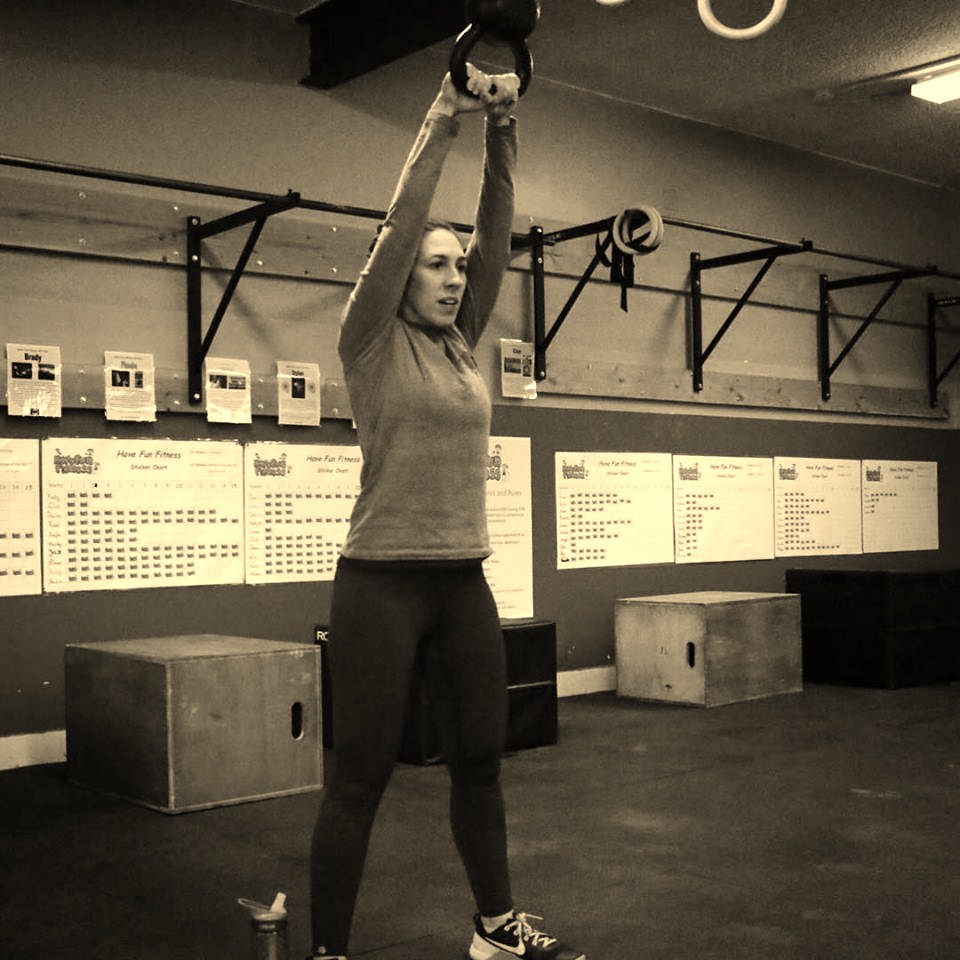
Courtesy: CrossFit Immortal

Courtesy: CrossFit Immortal

Four years ago, after suffering through one of my first CrossFit classes, a golden goddess of a woman encouraged me to “Just keep coming.” I’m grateful she did.

Amy, who drank the same Kool-Aid over a year ago, shares with potential newbies what they can expect if they give it a chance.

Amy is a corporate wellness specialist by day, and a freelance nutrition advisor and writer by night. She is an avid CrossFitter and a mom to 3 active kids. She blogs at Fresh Squeezed Mom and obsessively collects healthy recipes on Pinterest.

me's avatarFresh Squeezed Mom

The other day at my gym, CrossFit Immortal, a woman was taking her first class. It was a grueling workout and I noticed her struggle to complete the exercises and to overcome her intimidation. Afterwards, a few of us told her that she’d done a great job, and we reassured her that it gets easier. But there was so much more I wanted to say, as someone who was in her shoes a little over a year ago:

Just keep coming back. You will be stronger, faster, and more flexible than you were before. I decided when I turned 40 that I needed to get in better shape. I had always been active, but never particularly strong or athletic. As a kid, I never earned that Presidential Fitness Award and rarely made it off the bench in sports. As an adult, I could run a few miles but I…

View original post 796 more words

To The Young Lady Who No Repped Me During The CrossFit Open; Thank You

Courtesy: CrossFit

Courtesy of CrossFit

HuffPo Women

No matter how hard I tried, I couldn’t get my chest to touch the pull up bar.

It was the third workout of the CrossFit Open; an annual fitness test involving judges and score cards where over 300,000 CrossFitters worldwide do the same prescribed workout once a week over a five week period, or as in my case, a scaled version of said designated torture.

The 2016 Open was the first time I paid the twenty bucks and entered my name in the system. After 4 years of pursuing evidence based fitness, participating in mild competition holds me accountable to an exercise routine. Besides, the Friday Night Lights set up gave me a reason to forego evening parenting responsibilities. Plus, the coach stores beer in the gym fridge.

I felt confident going into this third Friday.  The task at hand involved jumping chest to bar pull ups. I’m 5’9. I can jump. I know how to do a pull up. I thought; piece of cake.

But I underestimated the importance of the angle of the pull toward the bar. Perhaps during my pre-kids, D cup days it wouldn’t have been an issue, but now a deflated C, I left a sizeable amount of air between the girls and the iron.

Each unsuccessful repetition of the movement resulted in a “no rep” from the judge. I hung from the bar like a sloth, praying for the clock to run out while convincing myself to go at again. Then, 15 seconds before the final buzzer the coach said, “Switch your grip.” I held on to the rig in chin up position and jumped. Slam! My chest hit the bar with ease.  Unfortunately, my renewed optimism was short lived. “5-4-3-2-1…” The music went silent.

Afterward, a young lady who assists with the kids’ class asked, “How’d it go?”

“What a debacle,” I huffed.  “That switch grip was the golden ticket, but I ran out of time.” I skipped the beer and went straight home, determined to improve my score.

Two days later, I did what any self-respecting, half crazy CrossFit disciple would do; I went back to redo the workout during open gym.  The same young lady was the designated judge for the morning.

When I was ready, she cranked up the tunes and started the clock. I made my way through the jumping pull ups using the reversed grip. After a few rounds my forearms stiffened and quads stung. My chest began to miss the bar.

“No rep!” she called.  “Almost there.”

I tried again.

“No rep! Let’s go, Red. You got this.”

But I didn’t “Got this.” My thoughts turned dark. Who does she think she is with the no reps? I’m not an uber-athlete. I skipped my morning newspaper to be here. Not to mention the fact that I could be this girl’s mother.

I wanted a break and I wanted her to give me one. Miss teenager could have let the no reps slide. She could have turned a cheek.  But she didn’t.  She could have felt intimidated. But she wasn’t.

So, I took a few breaths, regrouped and forged ahead. By the end of the seven minutes, I had a beautiful battle scar of bruise on my chest. What I also had was a legitimate and nearly doubled score compared to Friday night. And I had my judge, who held me to the standard to thank for it.

The following week, I took note of the young CrossFitter’s approach during regular sessions and the remaining Open workouts.  Each time she completed an Olympic lift or moved through a workout, she held herself to a high standard of form and function; and when she made a mistake, she no repped herself. Turns out, my judge hadn’t asked me to do anything she didn’t expect from herself.

At seventeen, this young lady already owns the integrity and courage that took me half a lifetime to cultivate, making her a powerful role model for girls and us masters, alike.

Soon, she will apply to college, graduate high school and move out on her own. As she cycles through life events, I hope she highlights these qualities when speaking with admission officers and future employers. And I hope she seeks out similar traits in others as she builds friendships and falls in love. Resume worthy accomplishments, physical strength and youthful outer beauty will fade; character will endure.

Integrity and courage are sometimes met with gossip, envy, and judgment. So when she catches slack for the high standards or the backlash cracks her confidence, I encourage my judge to hang tough and perhaps recall the time she refused to let this old timer break the rules during the CrossFit Open; because young lady, when it comes to life, “You got this.”

I SAID WHAT?…Standardized Testing; My Case for STILL Opting In

LifeSavers

Brace yourselves.

The 3rd-8th grade English Language Arts (ELA) and Math Common Core standardized tests are coming. You know the ones; the high-stake assessments pitched by politicians as guaranteed to close the achievement gap, ensure children are college and career ready, and monitor the health of school districts.

Ten years ago, as a fourth grade teacher, I had the experience of administering and grading the state ELA and Math tests under No Child Left Behind in the same school my children attend today.

Last April, my then third grader took the Common Core version for the first time. Many of his peers and an estimated 20% of children statewide did not. Their parents “Opted Out.”

Those who joined the Opt Out Movement poignantly expressed concern citing that the current, mandated state assessments cripple public education, compromise the professionalism of teachers, steer time away from creative, meaningful curriculum, suck the joy from learning, and kill young spirits with its developmentally and grade level inappropriate language and length.

Despite the fact that I agree with these points, am a supporter of education historian and activist Diane Ravitch’s platform, and believe the assessments in their existing form offer no diagnostic value for teacher or student,

I Opted In.

It wasn’t because I’m worried about the loss of district funding or the perceived reputation of my son’s school, nor was it because I’m a data hungry mama.

Truthfully, if I felt his learning needs weren’t being addressed, I may not have exposed him to a testing environment that requires nine year olds to sit several hours over a 3-day period for two consecutive weeks. Furthermore, if my school district had Opted Out, I would have obliged.

As a public school student, my son is automatically a pawn in the conundrum of educational reform; ammunition in a grown up battle.

But he doesn’t know it. And that’s good.

He is fortunate to attend a child-centered school that takes pride in their programs.  Inside the classroom, teachers do their best to thoughtfully integrate test prep into an already rich curriculum. Since state testing commenced some 15 years ago, the school district has stood behind their mantra; standardized assessments are a snapshot in a child’s day.

Buzz does not exist.

Outside the school, administrators publically voice concern about high-stakes testing.  Board of Education members travel to the state capital to fight for school district rights and have been known to stand firm outside the Chairman of Education Committee’s office until the senator answers their questions.

Advocacy is a priority.

Out of respect for my son’s innocence, love for his teacher, our leaders’ efforts, and in keeping with the belief that anxiety breeds anxiety, I don’t express my testing distaste at home and I don’t initiate conversation with my child about the “big state test.”

He knows it’s happening.

Had I Opted Out, my son would not only know it is happening, but also be acutely aware that he’s stuck in the middle of a movement that effects the quality of his education. And in my opinion, a nine year old does not need this additional burden thrown upon his shoulders.

So like the time he fell off the playground swing and looked to my reaction for his, I bit my lip and played it cool as the test date approached.

As such, when he came home after the first day of the English Language Arts test last spring, this is what he told me…

“Today was the big state test. The teacher put our desks in a line, the old-fashioned way so we could have space. She gave us gum to help us focus. I didn’t like the flavor so I didn’t have any. We took the test for about an hour. Then we got two recesses. During one of them, I played Knock Out and took second place against a 4th grader. We don’t have any homework; I have no idea why, but we don’t. It was a great day. Can I have a snack?”

My response? “Good for you.” I did not ask test specifics, how he worked, whether or not he finished, or how he performed. “Yes, help yourself.”

The morning of the Math test a week later, his primary concern was to make sure he packed orange flavored Life Savers in his backpack. “Mom, sucking on them helps me focus.  Plus I like to trade them with friends.”

“That makes sense,” I said.

The 2016 standardized tests are being administered in less than one month. Now what?

I don’t believe the elimination of standardized testing is realistic and the likelihood that I will Opt Out my child this year is slim. But I do believe a compromise is necessary.

Juan Gonzalez of the New York Daily News said, “Back in 2009, the old state tests showed 77% of students statewide were proficient in English. The next year, the pass level was raised and the proficiency percentage dropped to 57%. A few years later, Albany introduced Common Core and the level plummeted even more; to 31% statewide. Same children. Same teachers. Different test.”

Step one: Ensure the learning standards are based on principles of childhood development.

Step two: Reconstruct the test.

Developmentally appropriate standards and tests are the foundation for a balanced educational landscape where learning is more joyful than not and standardized assessments play a small but meaningful role in shaping a young person’s school experience.

The Opt Out movement and those who support it are effecting change, but there is much work to be done. So instead of having a casual conversation with a board member or reading education experts’ blog posts, I need to get proactive and stand alongside them.

But I’ll be sure to leave my son home; to play Knock Out, sample Life Savers, and enjoy his final year of elementary school because that’s his job.

Advocating for a sensible public school education is mine.

Take Away One

Courtesy Little Rock Family

Courtesy Little Rock Family

ML_published_badge_red_Mamalode

“I hate Thursdays,” Bubbe barked.  “I wake up early for band, go to school, spend two more hours in religious school, come home, and do homework.  I need a break.”

“You’re right,” I sighed.  “But education is not an option.  Band is a commitment and you need to finish what you started.  Please put your clarinet away, get one homework sheet done, and pack a snack for Hebrew school.  We’re leaving in twenty minutes.”

Later that evening, I scrolled through registration emails for the upcoming season’s optional extracurricular activities:

Baseball: League 1 and/or League 2.  Travel team.
Tennis, soccer, swim, lacrosse
Martial Arts
CrossFit Kids
Lego Engineering
Hip Hop
Drama, drawing, Junior Chef…

and thought about the last line of my response to Vicki Abeles’s New York Times’ Sunday Review piece, “Is School Making our Children Ill?”

Let’s resolve to take a step back and give children back their childhood.

In my Letter to the Editor, I complimented the Irvington High School community in Fremont, California for taking steps to rescue students from their high-stakes childhoods by limiting homework requirements and encouraged parents of young learners like me and those of my students to be brave, take ownership and embrace such efforts by curtailing after-school and evening enrichment in an effort to preserve the social, emotional and physical health of our children.

I often fantasize about what might happen if children, from toddlers to teenagers who live in a community laden with a multitude of well intended non-school related activities gave them up.

Would the children be lost; bored and confused by the lack of structure?  At first, until they learned how to organize and occupy themselves.

Would they stare at screens instead of reaching out to each other?  Probably, until an observant grown up or precocious peer stepped in.

Would their resumes suffer, leaving them unable to prosper in a society fixated on success, competition and career?  On the contrary; extra time and space would give them a chance to practice the socialization, thinking, and problem solving skills needed to thrive later in life.

After the initial shock wore off, I think the children would forget how busy their lives once were.

I imagine they would pack the playgrounds and

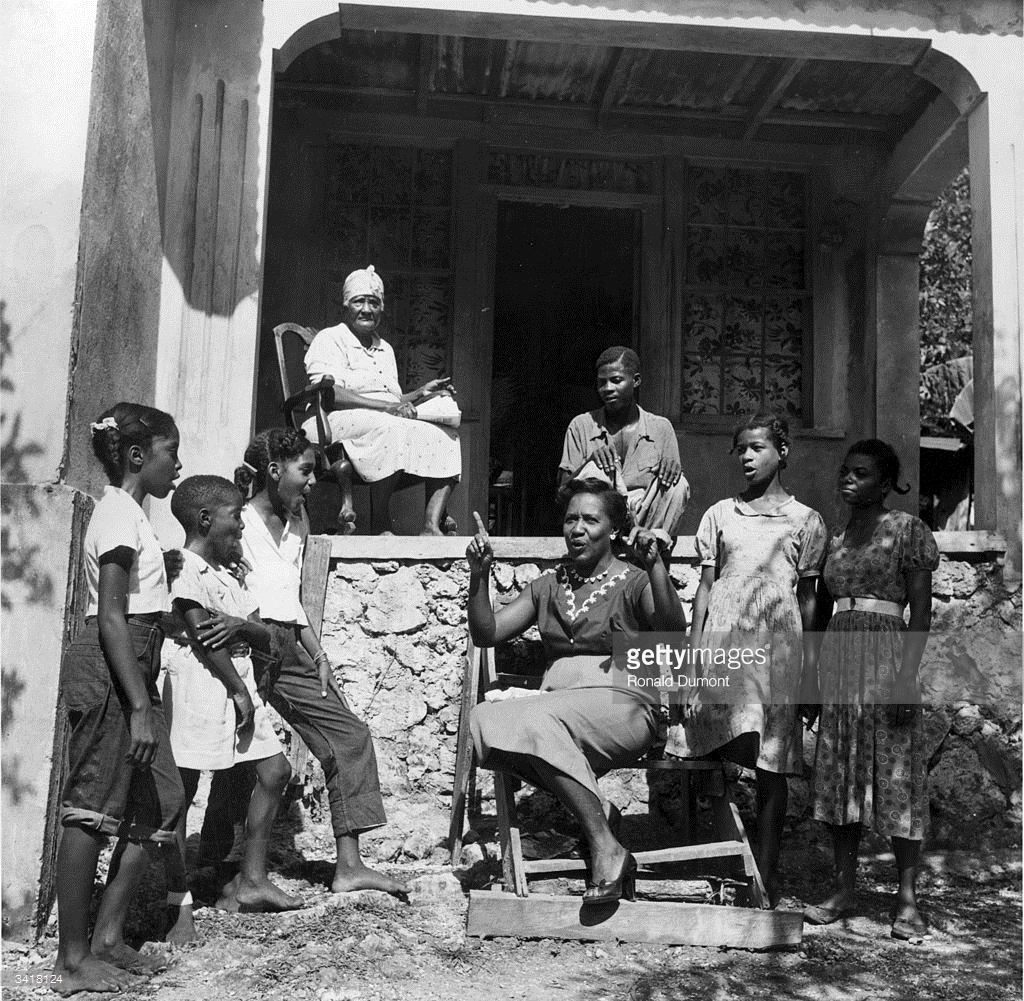
Courtesy of Getty Images

Courtesy of Getty Images

pick up the sport they previously raced off to play with whoever was nearby. Put on shows,

Courtesy Bored Panda

Courtesy Bored Panda

hang from trees,

Paul McDonough Courtesy Sasha Wolf Gallery, NYC

Paul McDonough Courtesy Sasha Wolf Gallery, NYC

visit with friends,

Coney Island Teenagers Harold Feinstein

Coney Island Teenagers Harold Feinstein

relax with family,

Courtesy Getty Images

Courtesy Getty Images

get more sleep,

Courtesy Bored Panda

Courtesy Bored Panda

and take that necessary break.

And I’m pretty sure the adults in their lives would come to welcome the change.

Perhaps if these young people had scaled back schedules, their schools would not have to revamp homework policies like in Fremont, delay start times to accommodate the sleep deprived like in Seattle, and implement mindfulness training to battle the growing epidemic of childhood anxiety and depression as did New York City.

While the educational system has a responsibility to promote childhood wellness, we parents and guardians do as well.  Children schlepping from class to practice to workshops and back again offsets the effort made by teachers and administrators and puts additional stress on kids and families.

Still, my under-scheduled fantasy is a daunting reality for this worried mom.

What if my boys are the only ones who opt out?  They’ll feel excluded and alone.

What if they lose a competitive edge?  How can they impress college admissions let alone make any high school team?

Doesn’t formal exposure to the arts, technology, and team play breed well roundedness?

It’s healthy to take risks; sample new and different things.

Besides, Bubbe and Skootch seem happy when they are busily in the mix.

But their childhood is not mine, nor is it about my parental goals, expectations, angst or insecurities.

With that, I marked the registration emails as unread and approached Bubbe.

“Here’s the deal,” I explained.  “You know school and band are a given.  Think about the three other activities you participated in this time last year.  Rank them.  Keep the top two.”

“I definitely want my tennis lesson,” he said.  “And I’d like to try baseball again.  So I guess I’ll stop CrossFit for now.”

I cringed.  Bubbe nixed the one extra I believe physically and mentally benefited him most and chose a sport that requires a greater weekly commitment.  “Okay,” I said.  “Sounds like a plan.”

Gaining a free afternoon may not reflect the childhoods of yesteryear, but it’s a start.

Let’s bring back rest, play, and old-fashioned fun.  This season resolve to take away one.

RED’S WRAP SAID WHAT?…On The Birthday of My Oldest Child

Jan’s insightful and beautiful philosophy about motherhood leaves me torn.

My head tells me to raise independent children who grow up to “love other people more than me,” but my selfish heart tugs in the other direction. I struggle with the “letting go” part of parenthood. I cry at milestones and do too much for Bubbe and Skootch every day in between.

Come to think of it, such ambivalence probably explains why I still make my 10 year-old’s bed and wipe my 6 year-old’s backside.

Aah, the conundrum that is a mother’s love. Happy Valentine’s Day!

Jan Wilberg's avatarRed's Wrap

IMG_4065I was never one of those moms who grieved their kids growing up. I thought it was great.
I didn’t want them to be babies forever. Or to be toddling around the house indefinitely. I didn’t want to stand on the sidelines of wet soccer fields with a cold cup of coffee watching confused kids kick the ball to each other on Saturday mornings that seemed to last for months. I liked being the mother of little kids but only because of its impermanence.

I love that my kids are grown up. And I say that without the least bit of angst.

Oh, I look back and I remember them as little kids. How I carried them everywhere, how I stroked their cheeks to calm them, laid on the couch with their little selves asleep on my chest, sang to them songs I made up and that no one else…

View original post 155 more words

Why Write?

why-do-you-do-what-you-do-2

My favorite place to be is in my head.

As a young girl, I soaked in the bathtub with the boom box blaring, dreaming up dance routines and doodled across my paper bag book cover until graphite designs swallowed the cardboard colored wrapping.

But it never occurred to me to try my hand at creative writing; I didn’t like to read and the physical act of writing only ever led to a callus on my middle finger.

Then one of my teachers assigned our class the task of writing an original story, forcing me to apply my healthy imagination elsewhere.

Inspiration didn’t take long.  On the bus ride home from school the same day, I was struck by images for an opening scene so fabulous in my ten year old brain that I immediately took pencil to paper and composed what I believed to be the start of a master piece.

This rush of innovation convinced me I was the next Judy Blume.  I labored over my story, submitted the completed manuscript with the exuberance of A Christmas Story’s Ralphie, and waited for my Ms. Shields to award me with accolades and an A+.

My young author fantasy collapsed within a week.  As I read through Ms. Shield’s blanket of edits, I could hear the red ink cackling, “You’re not good enough, kid.”  Already a perfectionist, I cast my new ambition aside.

Sort of.

In high school I dabbled in poetry, in business school took fiction writing and literature courses, and as an elementary school teacher, loved to teach the craft.  Each time, self doubt swallowed the artistic undercurrent.

Then I became a mommy with young children desperate for a hobby that fulfilled me in a way diapers, laundry, and sleep training never could.  I sampled dance classes but lost interest when I couldn’t remember the routine from week to week and researched community art classes but concluded my drawing skills were best left in the margin.

Nothing stuck until one snowy morning on route to preschool drop off, words stepped forward.

My youthful, creative energy plunked down in the passenger’s seat beside me.  “You don’t need fancy degrees, a library spilling with classics or outside approval to write,” she explained.  “You have heart, experience, and curiosity.  It’s time.”

Here I am, six years later writing picture books for children and essays for the grown-ups in their lives.  Why?

I write to share my truth after 25 years of secret keeping.

I write to honor the child; to validate their place in this world, capture their joy, experiences and feelings and to preserve the innocent spirit I lost too soon.

I write so Bubbe and Skootch have access to a growing collection of their mother’s thoughts and beliefs so they may learn who I am in addition to being Mom

I write to model for them what it looks like to pursue a passion.

Sometimes it’s easy to lose sight of why I do what I do.

So whenever my ego swells, I become consumed with clicks, views and audience expectations, the idea pipeline shrivels, deadlines approach, rejections mount, a critique breaks my spirit or life just gets in the way, I take a breath…

relax into my favorite place,
hone in on my heart,
open the flood gates
and write.

I SAID WHAT?…My Letter to the Editor in The New York Times

Evan McGlinn for The New York Times

Evan McGlinn for The New York Times

I wrote to The New York Times after reading Vicki Abeles’s Sunday Review piece, “Is School Making our Children Ill?”  Today, The Times ran my response in the printed paper as well as online.

The link to today’s Letters page: Reducing the stress on students

Here’s what I had to say:

Kudos to the Irvington High School community in Fremont, Calif., for taking steps to rescue students from their high-stakes childhoods such as limiting homework requirements and implementing pass-fail grading in some classes.

As an early childhood educator and mother of elementary-school-age children, I think we parents of young learners also need to be brave, take ownership and embrace such efforts by curtailing after-school and evening extracurricular activities like sport travel teams, dance, music and STEM workshops in an effort to preserve the social, emotional and physical health of our children.

A multitude of these well-intended additions eats into down time, rest and unstructured play and creates stress for children and families. With a new year upon us, let’s resolve to take a step back and give children back their childhood.

JENNIFER REINHARZ

Pleasantville, N.Y.

Let Him Be Late

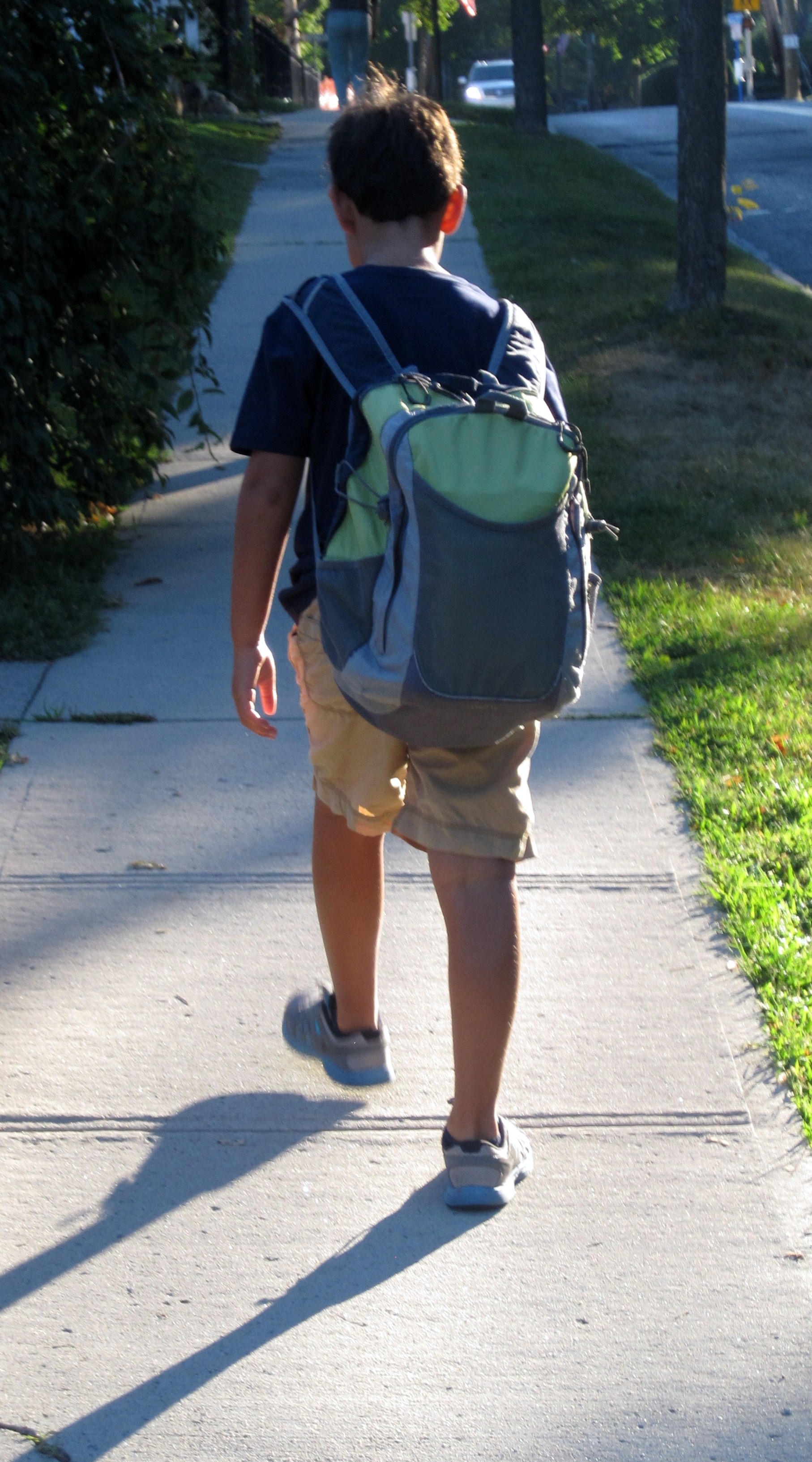
Walking to school

tpt-badge_contributorScary Mommy badge

Late is something I am not.

Not to meetings or meet ups.  Count on me to help the host kick off her party or the coach unlock the gym door.  In the words of my grandmother, “Five minutes early is on time.”

Then I gave birth to Bubbe who arrived one week late and after two hours of pushing.  A little guy who stopped to collect pebbles from the sidewalk, admire makeshift rivers on a rainy day, and construct block towers when he was supposed to be eating breakfast, Bubbe’s dawdling challenged my timely tendencies.

The slow approach appeared to stem from his developmental delays.  As a toddler and preschooler, Bubbe worked regularly with speech, occupational and physical therapists.  He and I did much schlepping to services during the early years.

To ensure my son got what he needed when he needed it, I planned our schedule around his clock.  I laid out clothes, organized the diaper bag, and packed snacks hours in advance.  I set timers, offered reminders, and built in daily dawdle time.  There were days when Bubbe played along, but those were rare.  “Hurry up” became a staple in my vocabulary and carrying his boneless body out the door and onto the next appointment became my primary source of exercise.

After a decade of exposure to my anxious nudging and keen management skills coupled with his hard work and a little maturity, I expected Bubbe to come to value my vision of time.  No such luck.

This tortoise syndrome became a wider concern at the end of third grade when it led to academic road blocks.  His teachers investigated.  Turns out, Bubbe’s brain doesn’t send signals as fast as mine and most peers.  To process, organize and focus thoughts and movements takes hard work and energy.  Dawdling is part of his DNA.

Armed with the information, I intended to shift my parenting approach.  But the thought of giving my child space to figure out his day at the risk of him being tardy rattled me to the core.

It doesn’t matter how Bubbe’s brain is wired.  I thought.  He has to learn how to move faster; use time wisely.

I held the reins.

Bubbe’s fourth grade year commenced with him hearing my voice on auto replay each morning.  “Get dressed.  Eat breakfast.  Find your backpack.  Don’t keep your friends waiting.  C’mon let’s go.”

Too big to fling him over my shoulder; prods graduated to threats, coaxing converted to yelling.  I was met with eye rolls, I don’t cares and whatevers.  Our home transformed into a battleground, leaving Bubbe and I frazzled and fried before the day began.

Then I went back to work.

My responsibilities multiplied overnight.  I no longer had space in my brain to try and change his.  I was forced to accept Bubbe was older and in charge of his actions.  I was also forced to accept that he no longer needed me in the same way.  I resolved to “do” my tween differently.

Step one: let him be late for school.

One morning soon after, I awoke Bubbe as per the usual routine and announced, “We are leaving at 7:45.  You have until then to get up and do your thing.”

At 7:40 he was still in bed.  “Your brother and I are leaving in five minutes.  Just lock up on your way out.  The school bell rings at 8:15am.  See you there.”

The neighbors knocked on the door.  Skootch and I left Bubbe behind.

As we walked the three blocks, I looked back but there was no sign of him.  I dropped off his brother and headed across the school grounds toward the front gate.

Still no Bubbe.

I turned the corner toward home.  There he was, strolling up the sidewalk; dressed appropriately, jacket on and with backpack in tow.  For the first morning in weeks, Bubbe was smiling.

I smiled back.

As we passed each other, my son leaned in and nuzzled his brow into my chest.  “I love you, Mom.”

“I love you too, sweetheart.  Enjoy the day.”  We went our respective ways.

And no one was late.

DONNA GWINNELL LAMBO-WEIDNER SAID WHAT?…Once the Light is Out

jazzface

A beautiful tribute to a beloved pet.

Donna Gwinnell Lambo-Weidner's avatarDonna Gwinnell Lambo-Weidner

jazzface
I miss you already.

Once the light is out and the room is silent,
I will miss you even more.

“Remember the time…” fills the house already.

Once the light is out and the house is silent
I will remember you even more…

Like how you taught me to pause, take a deep breath, and jump to find my joy

View original post 112 more words

What Children Need in Lieu of Mindfulness

Mindfulness quote

The practice of mindfulness has crept its way into elementary and preschools.

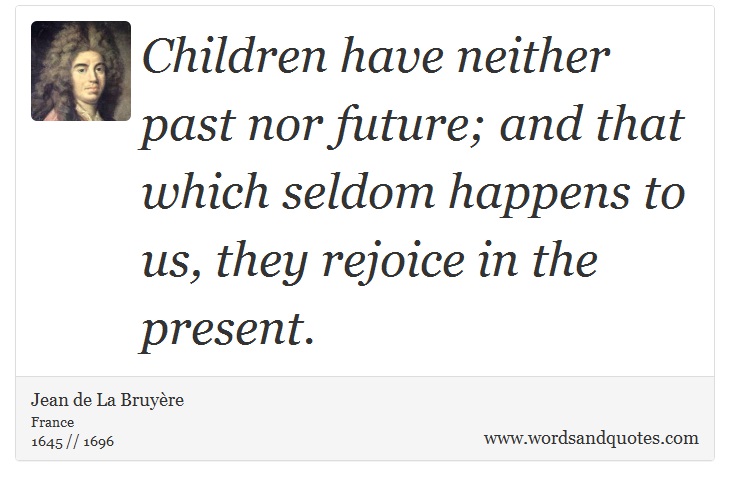
Biologist, Jon Kabat-Zinn, coined the term “mindfulness” in the 1970s to describe the act of “paying attention on purpose” to the present moment, with a “non-judgmental” attitude.

Mindfulness techniques are being used in the classroom to help children cope with stress and anxiety as well as to help them calm their mind, find center, and focus attention.  Advocates believe designating school time to such training leads to improved behavior and academic performance.

As a teacher, I appreciate learning the art of mindfulness to enhance my classroom management repertoire.  As a mom, I welcome a daily dose of meditation as a respite for harried parenthood.  But I am a grown up.

Teaching preschool and elementary school aged children mindfulness is both redundant and a band-aid.  Why?  Because they are mindful by design and their stress is not self imposed.

Children live in the present.  Watch a 4 year old mix a leaf, grass and stone soup for the missing class tortoise or his classmate run wildly away from an invisible queen across the school yard.  Stop to observe a pair of nine year olds twirl until dizzy or a crew of fifth graders so engrossed in conversation they forget to heed a busy crossing guard and it will become apparent that children are led by heart and body in the moment.

Developmental psychologist Jean Piaget concluded children’s understanding of time and capacity to think in abstract terms are driven by cognitive development.

A preschooler’s foundation for time begins with a sense of what happens before and after a concrete experience.  His understanding of duration and the future does not match that of an adult.  That’s why a child under 4 is confused by words like “tonight” “later” “today” and “tomorrow,” and will often create ones like “yestertime.”   Even a child nearing Kindergarten will understand the phrase, “we are having lunch after I pick you up from school” over “we will have lunch at 12 o’clock.”  By elementary school, a first grader learns to tell time only to the hour and half hour.  Minutes are not introduced until second grade.

While children between ages 7-10 have a more mature sense of time, abstract, hypothetical thought is not fully developed until age eleven.  Up until early middle school, young people still benefit from a personal connection or concrete experience in order to make sense of a sophisticated idea.

For example, after reading Crenshaw, a middle grade novel which tackles the theme of homelessness, my ten year old went on to ask questions about our family’s financial condition and whether we have enough money to pay the rent in an effort to make sense of this cruel reality.  Even after I reassured him, the boy worried.

Encouraging my son to read a book I, the adult with my adult view of the world, thought would benefit his growth only produced anxiety.  He was not cognitively ready.

Adults can minimize the stress we create for and impose upon children by limiting its source.  But with poverty, trauma, and violence not as straightforward and repairable as developmentally rigorous academic standards, competitive athletic expectations, over scheduling, and the pressure to be well liked, well rounded and successful, we need to nurture their emotional health while simultaneously addressing the larger issues.

But meditation, deep breaths, and mantras are not the answer.

Children need love.

A veteran teaching colleague recently reminded me it is consistent love from a trusted adult whether it is a parent, relative, community member, or teacher that makes the difference for a child regardless of external forces.

Even as the family in the story Crenshaw struggled through hunger and financial hardship my son observed, “Living in a van didn’t seem so bad because the family loved each other.”

Children need time.

Time to move, play and socialize; time to create, discover and stretch their imagination; time to get from point A to B, be bored and to wonder.

The time scheduled for mindfulness  in school should be allocated to these activities because this is how children find their center.  This is what helps them focus.  This is what teaches body and environmental awareness.  This is how they were intended to manage stress.

Children are inherently present, non judgmental, and stress free.  So let’s give them love.  Give them time.  And then, let them be.