Picture Perfect Moments

The mother trailed behind her two girls down the lighthouse pier to the end where the bay empties into the Atlantic. Along the way, she watched her young daughters snap picture after picture on their smart phones. It didn’t take long for her to catch up. “You don’t have to take a picture of everything,” she declared. “Try and enjoy the moment.”

Mac, who was helping our boys and me collect rocks from the jetty below, heard the parent’s battle cry. He popped up from his hard labor, flashed a knowing grin and cheered, “Yes! Listen to your mother!”

The mom gave a half turn and returned the smirk. I couldn’t tell if she felt validated or violated. But as they moseyed away, I did hear her repeat the words – a little louder the second time.

I told Mac to mind his business, but couldn’t resist a response. “And here I thought I was the only one.”

Put down the phone flashes through my consciousness anytime I see it being used to record our every waking event. I think it to strangers and say it to our children and myself.

The televised parade of athletes during the Olympics’ opening ceremony, a tradition I’ve enjoyed since I was a girl seemed stained this year when several nations, in an effort to memorialize their experience, marched into the stadium accompanied by a blur of glowing screens held as high as the country’s flag.

This summer, family members designated Bubbe, “Spielberg”. He borrowed a defunct phone with a working camera to document a trip he took out west with his grandparents. It was the first time he had his hands on a device dubbed as his own and boy, did he go to town. Although it was great to see my son tap into the creative spirit, the child had a hard time letting go so much so that my in-laws sent me videos of him shooting videos.

I become engrossed with moment capturing too. Smart phones make the process sexy, easy and instant. Thanks to modern technology, I have a bulging photo folder of every cheeky smile, wave jump and sand marble run of our annual beach vacation since Bubbe and Skootch were small.

But there’s something satisfying about taking it all in. When swiping through the most flattering filter becomes a nuisance, I shut down the phone and keep my fingers crossed I’ll be able to recall the drippy ice cream faces, bike rides and hole-in-ones after the boys are grown.

I consider such restraint a generational skill. Unlike my children and the girls on the pier, their mom and I grew up in a low tech world; cameras had film, movie equipment was bulky, quality was a risk and we had to wait weeks to see the results. Even well into adulthood, camera viewfinders were small. We had no choice but to absorb the sights, sounds and smells; breathe, wonder and have the experience. And decades later, it’s those undocumented memories I return to when it’s quiet.

Had I stored those memories on the cloud, would I still consider them cherished moments?

If Mac had his choice, our family would implement a no picture taking policy. I prefer a balanced approach. We’ll continue to ban Bubbe and Skootch from tablets and phones while on vacation. If Spielberg gets inspired, he can borrow my camera. And I’ll still quick draw the iPhone when I get inspired by a pretty setting, Mac’s Dangerfield-esque antics and our growing sons.

At the same time, I’ll encourage the boys to join the parade, follow the drifting clouds as they take shape in the summer’s breeze and teach them that the picture perfect moments are not the ones they swipe click, caption and share; but the ones only they can see.
No Peaking Allowed

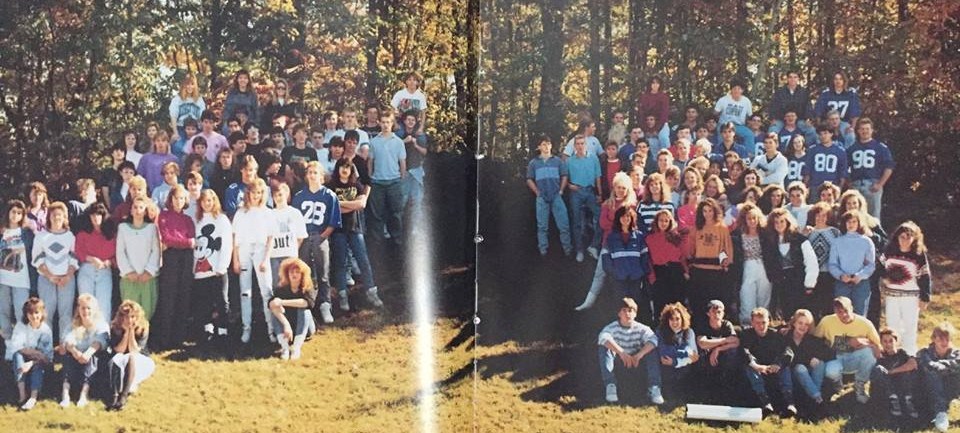
HS class picture

The text read, Come to room 307.

I adjusted my Spanx, grabbed the overnight bag and made my way up from the lobby. Behind the door stood two of my senior year gal pals, Shazzie and Pumpkin.

Although introduced in seventh grade and kindergarten, respectively my adult relationship with these ladies had fizzled to comments, likes and emojis. No matter. There was an easy joy about being together again.

We moved through pleasantries and tossed out filters. First order of business: pre-25th high school reunion cocktails. After a few sips, we got reunion ready while discussing work, shoes, travel, preferred products for color treated hair and of course, raising kids.

 “When my son turned three,” Shazzie said, “I told a friend, this boy can’t get more cuddly, loveable, or sweet. He’s peaked. Now, every year on his birthday she calls me and asks, is it true he peaked at three?”

“Well?” I said.

Shazzie pulled out her phone and played the recent I love you, Mom message her hoarse voiced tween left when a sleep away camp counselor returned his phone during a field trip.  “Not yet,” she replied.

We sipped some more, snapped selfies sporting party outfits and solo cups, and made our way to the main floor. I slapped on my name tag and entered the windowless, dim, pint-sized banquet hall. Waiting was a small gathering of some 125 classmates from my rural town. It was as if my mom had dropped me off at the 8th grade dinner dance equip with a cash bar.

And I wondered, had I peaked? Had any one of us peaked?

Determined to find out, I shimmied past the DJ and hot buffet, quickly refilled my cup and began to flutter about the room.

I ran into my old locker neighbor, intrigued by the cross-country mountain biking adventures he shares with his wife, concurred with my former art class tablemate who opened a restaurant after rediscovering his creativity through cooking, and was happy for the classmates who came out, found love and live life open and proud.

I chatted with my elementary school bus buddy who embraced her small town roots, adores fur babies and helps to raise her nephews, admired the crew huddled around a table who, despite time and distance sustained their decades long friendship, told Pumpkin, a working mother who nurtured her artistic talents and built an impressive career in advertising, a girl I envied as a child how much I respected her, and nestled up next to my high school crush; a sweet gentleman close to retiring from a career in law enforcement who looks forward to tending his Christmas Tree farm.

Many of my classmates married; most are raising children, some are nurturing sick parents. They have been graced with experience lines and silver hairs but the essence of who they were as children lives on.

And not one of them has peaked; not the jocks, pretty chicks, worker bees, artsy rebels, drama queens or goodie two shoes. Each seemed content with who they became; aware there’s more growth to be had.

And I, who was remembered for big hair, oversized sweaters and an even larger opinion felt inspired by my first friends.

When the clock struck midnight, the lone security guard directed us to the hotel’s neighboring bar, ushering me back to the 21st century. I thought about my own tween who was due back from sleep away camp the following week and a concerned letter he wrote about his lovie. Please sew Baby Lamb when I get home. I don’t like when he loses stuffing.

Middle school is on the horizon for my boy and so begins the battle of growing up. I can already feel his struggle; the image, fitting in, friendships, the wrestle with self and his place in the world.

I’ll continue to offer the mother to son advice he has come to hear ad nauseum: follow your passion, stay kind, always be yourself.

But from now on I’ll be sure to add, Hang tight. You’ll make it through. Just remember, no peaking allowed.

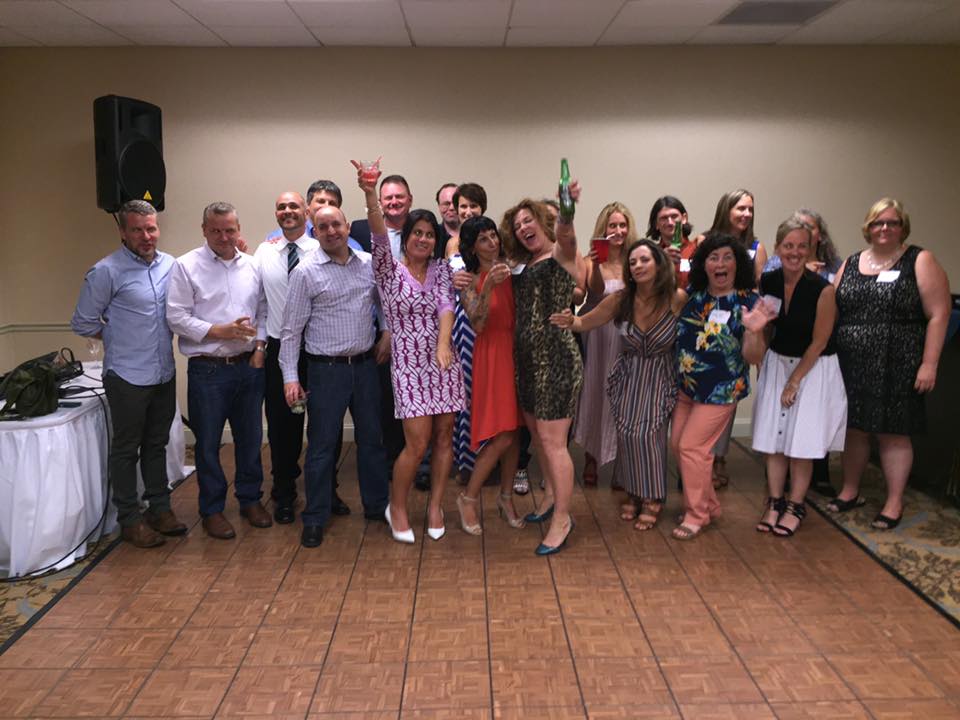
HS Reunion picture

STACEY WILK SAID WHAT?…I Told You So

Courtesy: Flicr Creative Commons

Courtesy: Flicr Creative Commons

Bigger kids. Bigger problems. Can’t wait.
In the meantime, maybe I’ll dye my hair blue; with Stacey’s permission, of course.

Take Away One

Courtesy Little Rock Family

Courtesy Little Rock Family

ML_published_badge_red_Mamalode

“I hate Thursdays,” Bubbe barked.  “I wake up early for band, go to school, spend two more hours in religious school, come home, and do homework.  I need a break.”

“You’re right,” I sighed.  “But education is not an option.  Band is a commitment and you need to finish what you started.  Please put your clarinet away, get one homework sheet done, and pack a snack for Hebrew school.  We’re leaving in twenty minutes.”

Later that evening, I scrolled through registration emails for the upcoming season’s optional extracurricular activities:

Baseball: League 1 and/or League 2.  Travel team.
Tennis, soccer, swim, lacrosse
Martial Arts
CrossFit Kids
Lego Engineering
Hip Hop
Drama, drawing, Junior Chef…

and thought about the last line of my response to Vicki Abeles’s New York Times’ Sunday Review piece, “Is School Making our Children Ill?”

Let’s resolve to take a step back and give children back their childhood.

In my Letter to the Editor, I complimented the Irvington High School community in Fremont, California for taking steps to rescue students from their high-stakes childhoods by limiting homework requirements and encouraged parents of young learners like me and those of my students to be brave, take ownership and embrace such efforts by curtailing after-school and evening enrichment in an effort to preserve the social, emotional and physical health of our children.

I often fantasize about what might happen if children, from toddlers to teenagers who live in a community laden with a multitude of well intended non-school related activities gave them up.

Would the children be lost; bored and confused by the lack of structure?  At first, until they learned how to organize and occupy themselves.

Would they stare at screens instead of reaching out to each other?  Probably, until an observant grown up or precocious peer stepped in.

Would their resumes suffer, leaving them unable to prosper in a society fixated on success, competition and career?  On the contrary; extra time and space would give them a chance to practice the socialization, thinking, and problem solving skills needed to thrive later in life.

After the initial shock wore off, I think the children would forget how busy their lives once were.

I imagine they would pack the playgrounds and

Courtesy of Getty Images

Courtesy of Getty Images

pick up the sport they previously raced off to play with whoever was nearby. Put on shows,

Courtesy Bored Panda

Courtesy Bored Panda

hang from trees,

Paul McDonough Courtesy Sasha Wolf Gallery, NYC

Paul McDonough Courtesy Sasha Wolf Gallery, NYC

visit with friends,

Coney Island Teenagers Harold Feinstein

Coney Island Teenagers Harold Feinstein

relax with family,

Courtesy Getty Images

Courtesy Getty Images

get more sleep,

Courtesy Bored Panda

Courtesy Bored Panda

and take that necessary break.

And I’m pretty sure the adults in their lives would come to welcome the change.

Perhaps if these young people had scaled back schedules, their schools would not have to revamp homework policies like in Fremont, delay start times to accommodate the sleep deprived like in Seattle, and implement mindfulness training to battle the growing epidemic of childhood anxiety and depression as did New York City.

While the educational system has a responsibility to promote childhood wellness, we parents and guardians do as well.  Children schlepping from class to practice to workshops and back again offsets the effort made by teachers and administrators and puts additional stress on kids and families.

Still, my under-scheduled fantasy is a daunting reality for this worried mom.

What if my boys are the only ones who opt out?  They’ll feel excluded and alone.

What if they lose a competitive edge?  How can they impress college admissions let alone make any high school team?

Doesn’t formal exposure to the arts, technology, and team play breed well roundedness?

It’s healthy to take risks; sample new and different things.

Besides, Bubbe and Skootch seem happy when they are busily in the mix.

But their childhood is not mine, nor is it about my parental goals, expectations, angst or insecurities.

With that, I marked the registration emails as unread and approached Bubbe.

“Here’s the deal,” I explained.  “You know school and band are a given.  Think about the three other activities you participated in this time last year.  Rank them.  Keep the top two.”

“I definitely want my tennis lesson,” he said.  “And I’d like to try baseball again.  So I guess I’ll stop CrossFit for now.”

I cringed.  Bubbe nixed the one extra I believe physically and mentally benefited him most and chose a sport that requires a greater weekly commitment.  “Okay,” I said.  “Sounds like a plan.”

Gaining a free afternoon may not reflect the childhoods of yesteryear, but it’s a start.

Let’s bring back rest, play, and old-fashioned fun.  This season resolve to take away one.

Let Him Be Late

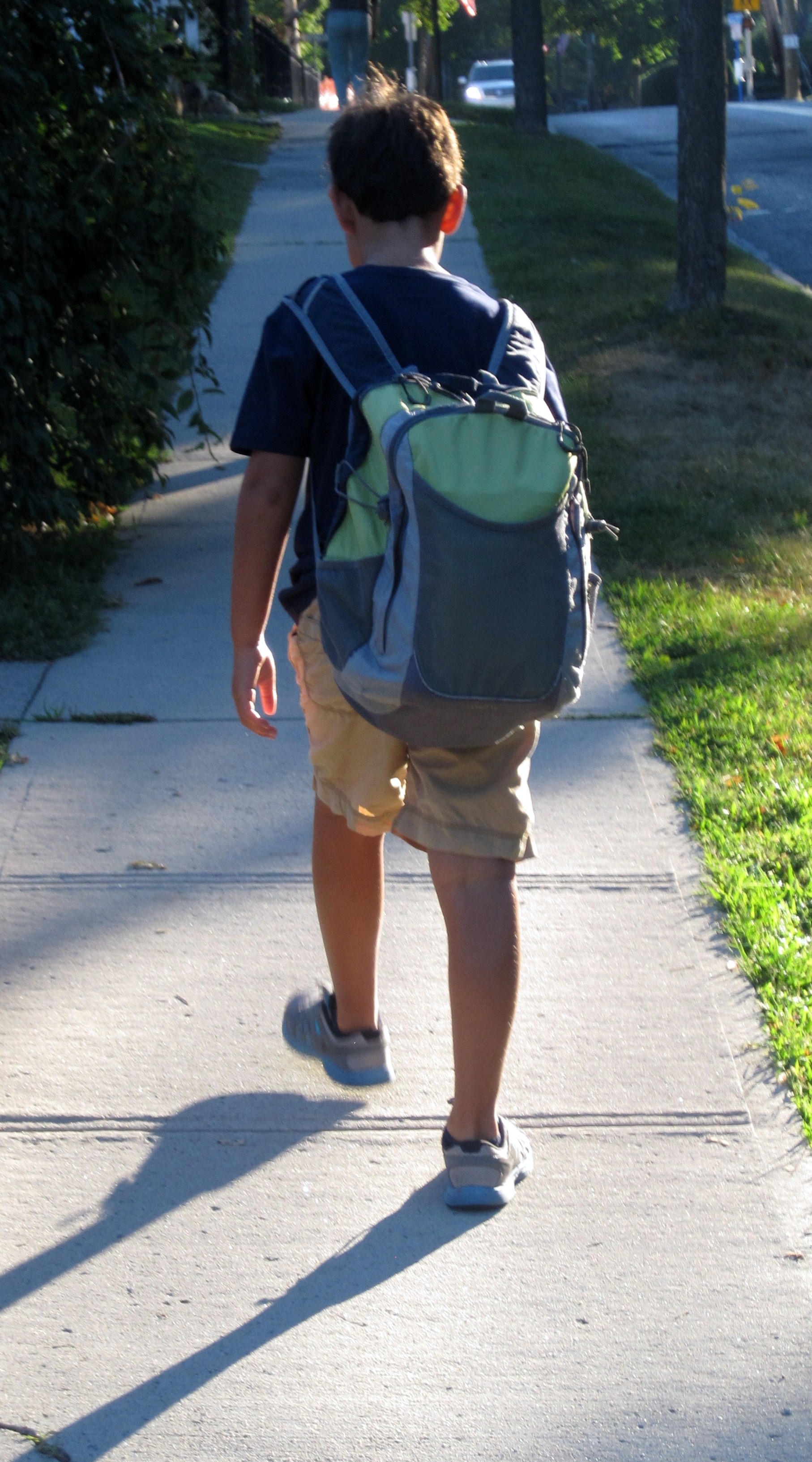
Walking to school

tpt-badge_contributorScary Mommy badge

Late is something I am not.

Not to meetings or meet ups.  Count on me to help the host kick off her party or the coach unlock the gym door.  In the words of my grandmother, “Five minutes early is on time.”

Then I gave birth to Bubbe who arrived one week late and after two hours of pushing.  A little guy who stopped to collect pebbles from the sidewalk, admire makeshift rivers on a rainy day, and construct block towers when he was supposed to be eating breakfast, Bubbe’s dawdling challenged my timely tendencies.

The slow approach appeared to stem from his developmental delays.  As a toddler and preschooler, Bubbe worked regularly with speech, occupational and physical therapists.  He and I did much schlepping to services during the early years.

To ensure my son got what he needed when he needed it, I planned our schedule around his clock.  I laid out clothes, organized the diaper bag, and packed snacks hours in advance.  I set timers, offered reminders, and built in daily dawdle time.  There were days when Bubbe played along, but those were rare.  “Hurry up” became a staple in my vocabulary and carrying his boneless body out the door and onto the next appointment became my primary source of exercise.

After a decade of exposure to my anxious nudging and keen management skills coupled with his hard work and a little maturity, I expected Bubbe to come to value my vision of time.  No such luck.

This tortoise syndrome became a wider concern at the end of third grade when it led to academic road blocks.  His teachers investigated.  Turns out, Bubbe’s brain doesn’t send signals as fast as mine and most peers.  To process, organize and focus thoughts and movements takes hard work and energy.  Dawdling is part of his DNA.

Armed with the information, I intended to shift my parenting approach.  But the thought of giving my child space to figure out his day at the risk of him being tardy rattled me to the core.

It doesn’t matter how Bubbe’s brain is wired.  I thought.  He has to learn how to move faster; use time wisely.

I held the reins.

Bubbe’s fourth grade year commenced with him hearing my voice on auto replay each morning.  “Get dressed.  Eat breakfast.  Find your backpack.  Don’t keep your friends waiting.  C’mon let’s go.”

Too big to fling him over my shoulder; prods graduated to threats, coaxing converted to yelling.  I was met with eye rolls, I don’t cares and whatevers.  Our home transformed into a battleground, leaving Bubbe and I frazzled and fried before the day began.

Then I went back to work.

My responsibilities multiplied overnight.  I no longer had space in my brain to try and change his.  I was forced to accept Bubbe was older and in charge of his actions.  I was also forced to accept that he no longer needed me in the same way.  I resolved to “do” my tween differently.

Step one: let him be late for school.

One morning soon after, I awoke Bubbe as per the usual routine and announced, “We are leaving at 7:45.  You have until then to get up and do your thing.”

At 7:40 he was still in bed.  “Your brother and I are leaving in five minutes.  Just lock up on your way out.  The school bell rings at 8:15am.  See you there.”

The neighbors knocked on the door.  Skootch and I left Bubbe behind.

As we walked the three blocks, I looked back but there was no sign of him.  I dropped off his brother and headed across the school grounds toward the front gate.

Still no Bubbe.

I turned the corner toward home.  There he was, strolling up the sidewalk; dressed appropriately, jacket on and with backpack in tow.  For the first morning in weeks, Bubbe was smiling.

I smiled back.

As we passed each other, my son leaned in and nuzzled his brow into my chest.  “I love you, Mom.”

“I love you too, sweetheart.  Enjoy the day.”  We went our respective ways.

And no one was late.

DONNA GWINNELL LAMBO-WEIDNER SAID WHAT?…Once the Light is Out

jazzface

A beautiful tribute to a beloved pet.

Donna Gwinnell Lambo-Weidner's avatarDonna Gwinnell Lambo-Weidner

jazzface
I miss you already.

Once the light is out and the room is silent,
I will miss you even more.

“Remember the time…” fills the house already.

Once the light is out and the house is silent
I will remember you even more…

Like how you taught me to pause, take a deep breath, and jump to find my joy

View original post 112 more words

My Brush with Greatness

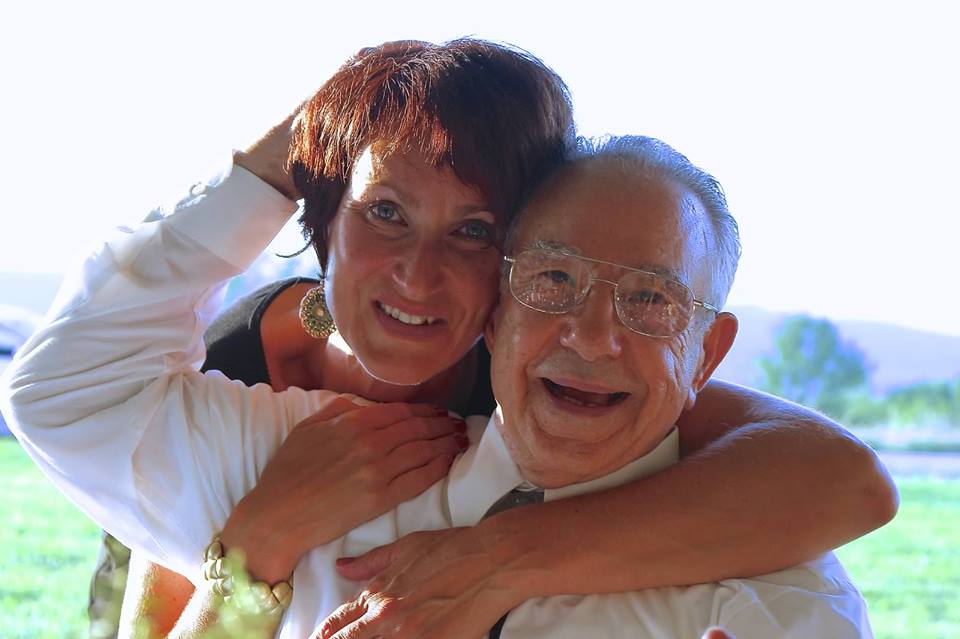
Me and Pop 2015

Grand Magazine

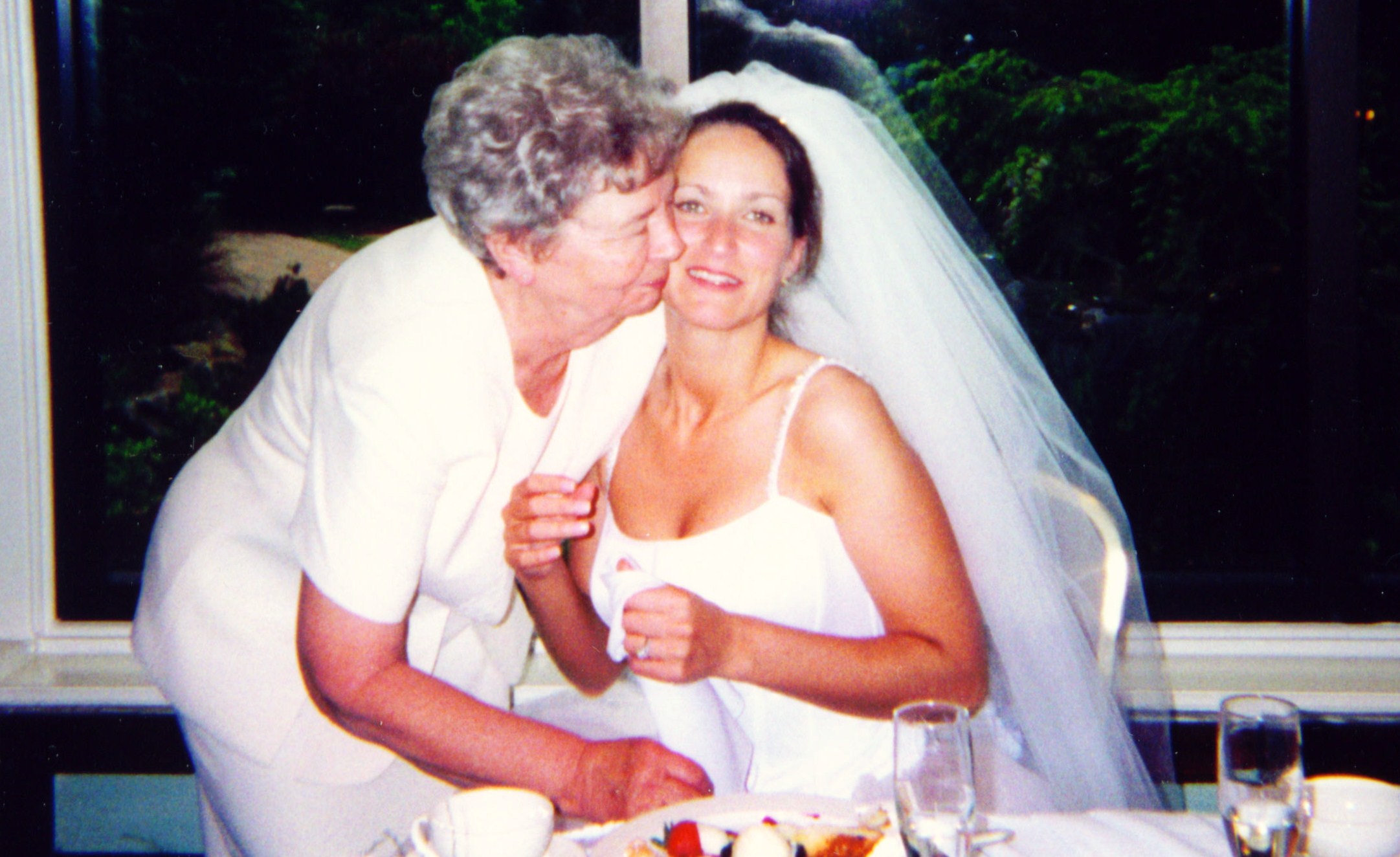
My grandfather remained in his living room’s Lazy Boy beside my grandmother asleep in a hospice bed where her twin recliner once stood until she took her final breaths.  They shared the space for sixty-five years and would not have had it any other way.

A few hours before my grandmother died, I talked with my grandfather for what felt like the first time.

With poor hearing and an often fiery spirit, I spent most of my forty plus years watching Pop share his World War II experience and debate about the political climate of the day from a distance.

Yes, we connected over old movies, late night cheese and crackers, Sunday afternoon football and his enthusiasm for teaching me about gadgets, opera and gymnastics but I did most of the listening.  Any of my thoughts were voiced through my grandmother.  She didn’t require me to repeat or clarify, knew how best to communicate with her husband, and preferred to be in charge.  The arrangement seemed to work best for everyone.

Sadly my grandmother was now unconscious; breathing aided by machine, pain numbed with morphine.  And although I was convinced she could hear us, it was clear my buffer was gone.

There Pop sat.  Face heavy: heartbroken, devastated and confused.

“The world is different today.  There is no goodness left,” he said.

I held his hand.  “No.  That’s not true.  There will always be violence, war, corrupt governments, and terrible decisions but most people are decent and good.”  I pointed to my resting grandmother.  “Like her.”

“I suppose you’re right.”

The family, who had gone outside for air, made their way back into the apartment.  Late into the evening as I said my goodbyes Pop looked up from his chair.  “Thank you.”

“You’re welcome.”

“No, really.  Thank you.  Stay how you are.  She would have wanted it that way.”

The moment redefined our relationship and revealed the essence of my grandfather.

It has been one year since my grandmother’s death.  I relied on her to shape my experience with my grandfather and I assumed Pop leaned on her in the same way.  Alone, I was sure his flame would extinguish.

Instead, he got up every morning and made himself coffee and eggs.  He learned how to launder his clothes, vacuumed the floor, stopped drinking wine and scotch for fear of losing his balance, and eventually opened the curtains in the bedroom.  Pop spoke openly about his grief and need to work through it on his own terms.

He accepted an invitation to a Veterans’ lunch at his grandson’s middle school and found himself unexpectedly and for the first time recounting his World War II experience aboard a ship that fought in the Battle of Normandy and Okinawa to a classroom of tweens.  When a student asked, What were you afraid of the most? Pop’s eyes filled with tears as he shared with these young people what it was like for an 18 year old boy to witness death.

He sent me an email after Bubbe left for sleep away camp to see how I was coping with the separation.  He stressed the importance of letting our children go and commended me for giving him a chance to spread his wings.  “Let your boys have their space to play, but always watch,” he advised.  “Just don’t let them know you’re doing it.”

He questioned the owner of my CrossFit affiliate as to why we do tribute workouts to honor fallen soldiers from recent wars.

“You honor one guy?” Pop asked.

“One at a time.  It’s a way for the CrossFit community to remember the ultimate sacrifice they made,” the owner explained.

“And you don’t know them?”

“No.  Not personally.”

Pop furrowed his brow and stared at the group photograph gym members took after one of the Hero WODs.  It was as if he was recalling the 400,000 American soldiers who died during the war in which he fought, remembering the 2,500 soldiers who lost their lives in one day on Omaha beach where his ship was offshore, adding up the 5,000 Americans who were killed at sea during the battle of Okinawa, and thinking about friends who saw combat but never came home.

“Okay.  But a lot of guys died.”

He stocked his refrigerator with ice cream and chocolate sauce so he was always prepared to build sundaes with Skootch, crouched on the carpet and shot marbles with Bubbe, and devoured the cannoli I brought him on Grandparents Day because according to him they help people “live to be one hundred.”

At the end of each visit he said, “Be happy.”

Perseverance.  Sacrifice.  Honesty.  Humility.  Empathy.  Patriotism.  Simplicity.  Optimism.

Greatness.

Pop embodies the mindset of his generation, The Greatest Generation; a group of ordinary men and women who survived the unimaginable.

These folks were staples of my childhood and young adulthood.  When I am with my grandfather in the quiet of his apartment today and am flooded by memories of afternoon stoop parties, Saturday night card games, Sunday dinners, holiday gatherings and family celebrations, it becomes quite apparent his generation is almost gone.

Pop strolled over during Skootch’s recent birthday as I pressed the candles into the cake.  “How are you all grown up?” he asked.  “You were only a toddler not long ago.  It went by so fast.”

My laugh lines smiled back at his and I thought, He’s right; now it’s my turn.

I only hope I do him proud.

In the meantime, I plan to relish in grandfather’s greatness for as long as God wills.  He has a lot more to give and I have much to gain.

On Becoming an iPhone Addict

photo credit: Algerina Perna/Baltimore Sun

ML_published_badge_red_Mamalode

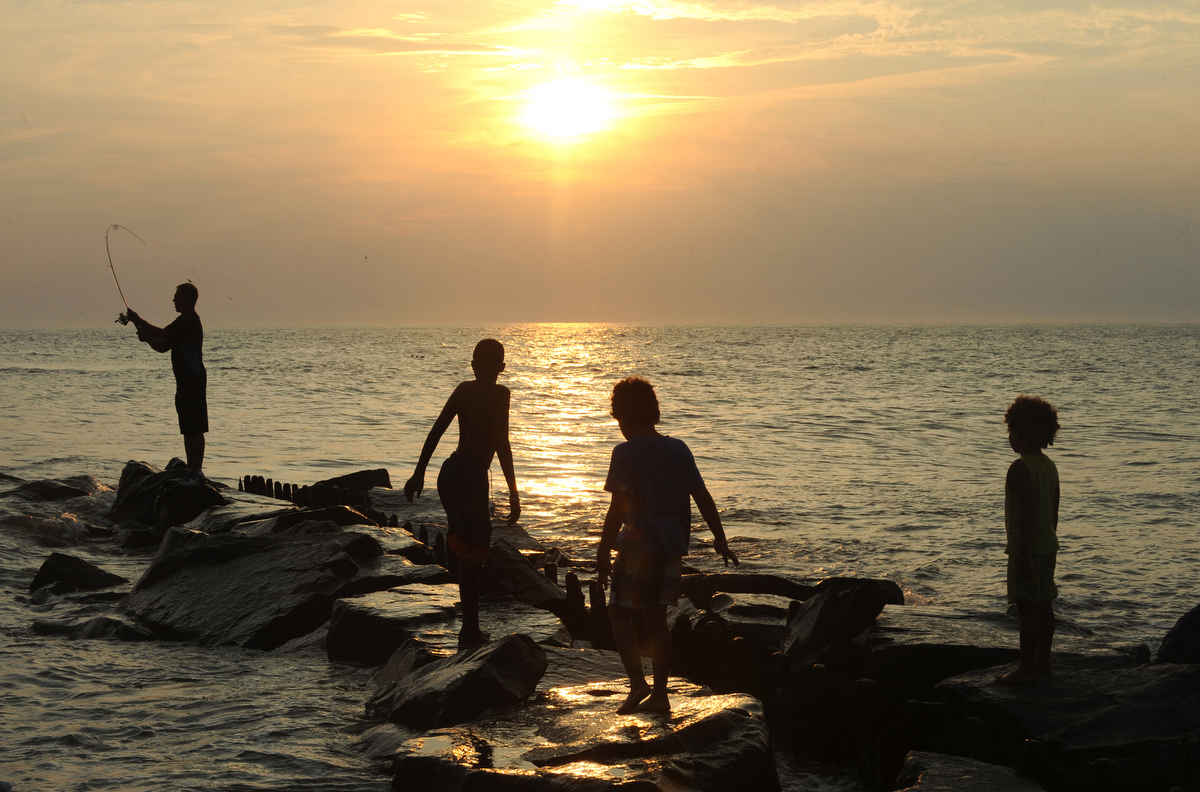
Mac and the boys mix a seaweed soup off the distant jetty.  I gaze into a misty horizon, body limp; Yingling nestled in the sand.  The rhythm of the waves at low tide aim to sooth.

Poing.  A hand twitches.

Ding.  Temples throb.

Whoooop.

The allure of mommy solitude is not enough for me to ignore the sound.  I reach for the iPhone.

Whose texting me? 

Who shared my post?

How many friends “liked” my status? 

Did a literary agent send an offer email at long last?

It’s the final evening of our family vacation.  It shouldn’t matter.  And yet my brain sizzles with curiosity.

Outsiders observe.  An intervention ensues.

Crash.  The waves argue their case.

Ring.  The ice cream vendor shakes his bell with disgust.

Whistle.  Even the diving kite overhead has something to say.

Nature’s hum is no match for the cocaine colored Otterbox clutched in my palm as I tap and swipe and stare.

Bubbe is wise to my growing affliction.  “Mom, you’re always on the phone.  Didn’t you say no electronics at the beach?  We are on vacation, you know.”

“You’re right,” I nod, tweet discreetly, and drum up an excuse.  “I only use it to take pictures.”

Skootch is convinced the world’s problems can be solved and the universe’s questions answered with a search engine or app.  “Why did my bucket float away?  Where did the wave take it?  When is it coming back?  Mom?  Mom?  Mom?”  He lifts my chin.  “Type it in.”

Many of my peers seem in control.  A walk on the beach with a childhood friend revealed her reasoning behind a quiet Facebook presence.  Upon stowing her iPhone in my fanny pack she shared, “Years ago, I found myself sifting through a wedding album of a friend of a friend and thought, what am I doing?  It was then that I made a conscious decision to stop.”

Tongue tied and stupefied, I rationalized a half-assed reason why, as a writer building a platform and in search of representation I needed to be savvy with social media.

There was a time when I sneered at the mother who looked at a smartphone in lieu of my face during a conversation at a preschool birthday party and rolled my eyes at the texting parent who barked orders from the playground bench.  Now I am that mommy.

And I know better.  I follow Hands Free Mama’s Facebook page.  I Pinterest technology articles.  I even held onto my Blackberry and a flip phone before that until recently because I prefer not to be plugged in.

I teach my children moderation.  Bubbe survived an electronic free sleep away camp, Deletion Day, and is painfully aware that a phone in his immediate future is unlikely.  Skootch doesn’t ask for technology at restaurants, in the car, or on vacation.  Both follow usage rules at home.

But my do as I say not as I do approach will not last much longer.

The sun is setting.

Skootch giggles up the dune chased by Bubbe who lizards across the sand.  Mac brings up the rear.  I stash the phone in the pocket of the Tommy Bahama lounger, pretend to scribble in my journal, and mindfully confess – I am an iPhone addict.

Quick.

Someone point me in the direction of rehab.

One, Lucky Granddaughter

Gram and me as a baby

Brain Child Logo

Mothering Mag logo

Two weeks ago, I lost my grandmother to cancer.  The disease engulfed Dot’s body almost as quickly as she learned the diagnosis.

When the doctors assured she still had a few weeks, I returned home, gathered my notebook, and made big plans to capture my grandmother’s talkative mood.

My mind raced with possibility; perhaps, as Jewish tradition teaches, Dot could fulfill the 613th mitzvah and write a Torah, a personal 10 commandments thus sealing her life scroll or perhaps, as a member of her church’s quilting guild she could share patch ideas for a memory quilt.

But by the time I got back to my grandmother’s bedside, she was already in a final sleep.  Weeks whittled to hours.  Before sunrise, she was gone.

Dot’s death was beautiful; swift, pain free, and at home surrounded by loved ones.  Her last days, passing, and funeral were a fluid waltz.  Everything fell into place as if she was the choreographer.

Without her words, I stretched my accordion memory file in search of tucked away treasures.  Two stepped forward; Sweet 16 and Oh Definitely.

Each birthday, my grandmother would caw over her candles, “I’m sweet sixteen and never been kissed.”  Sixteen was her forever age; the age at which she liked to see herself.

Pic of Gram sweet 16

Any time Dot emphatically agreed with a point, she broke her silence with a high pitched, “Oh, definitely!”

More memories began to surface.  My notebook soon filled to form Dot’s Sweet 16 of Definite-lys.

Definitely…

1.     Listen for understanding.  When conversing with others, don’t uh-huh, right, or yes them.  Take it all in.  Dot was everyone’s ear; mine included.

2.     Visit the sick.  My grandmother was not afraid to go into the fray.  She recognized that one’s comfort was more important than personal or situational anxiety.  The key to helping those failing feel alive, she recently told me, was to talk about old times.  Present day connections are less meaningful to a lost mind.

3.     Create a warm and inviting home.  Dot raised three daughters on the second floor of a modest, two-family house.  Even as the family grew, her apartment was the place to be; men congregated in the living room, ladies packed around the dining table.  A full home filled my grandmother’s heart.

4.     Keep an open door policy.  Dot always left an empty plate on the table.  Crowds of cousins, neighbors, and friends traipsed through the door in search of company and my grandmother’s eggplant parm, kielbasa, spareribs, and peanut brittle.  No appointment needed.  Guests knew when Dot’s Westminster doorbell chimed, she would welcome them.

5.     Talk to everyone and do it with respect and genuine interest.  My grandmother was well versed in the art of chit-chatting and boy, could she work a room.  From store clerks to politicians, children to commuters, she never categorized or judged.  In recent years, however, she became increasingly disillusioned with technology.  “No one stops to talk anymore,” she said.  It made her sad.

6.     Be a good time Charlie.  Cut a rug, laugh, quip, banter, sing.  Dot loved to tell tales of old boyfriends and reminisce about her young and single watering hole shenanigans.

Gram in curlers

7.     Send cards.  I’m convinced Dot single-handedly bankrolled Hallmark.  My grandmother sent a card to every grandchild, great-grandchild, in-law, daughter and cousin regardless of age for every birthday and holiday, Jewish, Christian, secular or otherwise.  Enclosed was always a personal check and for the little ones, an additional side of cash.  Relatives can’t help but smile when they talk about Dot’s cards.

8.     Watch your television stories, but limit the news; it is depressing and redundant.  When my grandmother told Mac she had to check into a quiet hospital room to escape Fox News, ISIS, and Ebola, he couldn’t help but laugh.

9.     Take advantage of an opportunity but own up to its responsibility.  My grandmother didn’t get her driver’s license until she was a mother of three in her thirties.  She loved to drive.  With a dashboard pat for luck and a tank that never fell below the half way mark, Dot was always on the go.  As her housemate until age five, I don’t remember ever being home before supper.  But when her eyes weakened a dozen years ago, she didn’t hesitate and returned the keys.

10.   Forge ahead.  My grandmother’s limited eyesight was exacerbated by arthritic knees, a temperamental heart, weekly doctor visits, and piles of medication.  Not once did she complain.

11.   Volunteer in your community, house of worship, schools or wherever floats your boat.  My grandmother’s obituary noted her occupation as Homemaker.  More so, she was a chauffeur, troop leader, lunchroom aide, caregiver, church elder, and neighborhood sentinel.  You name it, she did it because for her, the making of homes took a vested village.

12.    Say “I love you.”  Dot had a hard time doing this; showing love was easier.  The last time my grandmother heard me say I love you, she still flicked her wrist and squawked, “I know, I know,” trying desperately to fight the tears.

13.    Avoid self pity.  Dot was a Depression kid from a broken home who left school in the 10th grade.  These experiences never stopped her from embracing life.

14.    Communicate.  My grandmother didn’t speak to her sister for thirty years and regretted the lost time.  “Put all the cards on the table now,” she advised.  “Grudges are worthless.  Life is too short.”

15.    Keep the faith.  Dot had an unwavering commitment to prayer and church; attending and sharing a pew with the same senior ladies each Sunday, often offering the young ministers words of kindness and encouragement.  She held fast to what spoke to her in this universe and at the end, wasn’t afraid to let go.

16.    Love well.  During my grandmother’s final hours, her apartment was filled with family giving to her and my grandfather what she had always given to us: attention, care, support, strength, and comfort.  At her funeral, it was no surprise to hear that strangers approached my grandfather saying, “You don’t know me, but I knew Dot.  She was a special lady.”  My grandmother left an imprint on the hearts of many because above all things, she valued love.

Three days before Dot’s death, The Skootch said goodbye to his great-grandmother.

He stood at the base of the hospice bed and said, “I love you, G.G.”

“You do?” she replied.

“I will miss you when God comes.”

God came; all too soon and all too suddenly it seems and I miss her.

People speak of rocks; Dot was mine.  My grandmother was an exceptional lady who, during the era of her teenage crush, Frank Sinatra but long before Derek Jeter did things her way.

This way, her spirit, and legacy fill me today and always.

I am one, lucky granddaughter.

Most definitely.

Gram and me wedding picture

Two Sides of a Coin

Beach picture of the boys

Bubbe and The Skootch are two sides of a coin.

Bubbe, now a smidge under nine was the two year old who got off the classroom rug at dismissal only after he knew the other children had a place to go and the little guy who sat in the corner and covered his ears at birthday parties.  He is the child who relishes in engineering golf courses and marble runs out of anything he can get his hands on and the boy who recently told me after I advised him to push back as needed, “Mom, I’m not that kind of kid.”

Four year old Skootch, on the other hand, is a one speed, rock and roll, let me smell you ninja machine.  He is the kid who proudly wakes his parents at two in the morning to show us the late night grape juice he poured for himself, the child who sings loudest at birthday parties, the one who pops a balloon and tries to fix it, and the boy who loves a good boxing match.

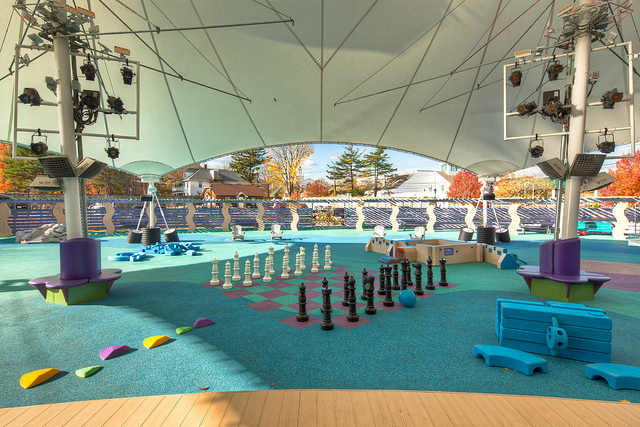
On a recent family outing, we found ourselves here;

stepping_stones_museum_children

The Celebration Courtyard of a nearby children’s museum.

I’m pretty certain this foamy, cerulean hued open play area is meant to encourage calm but on this particular Saturday it looked more like a loony bin for babes.

Bubbe naturally made a beeline for the blocks.  Swarms of children surrounded the construction materials, moving in and out, taking them at will.  He tried to grab what he could, but the other children kept getting there first.

The biggest boy of the bunch became a regular culprit.  Not a caregiver in sight, this young Lummox grabbed at our son’s small stash again and again without so much as asking.

Bubbe began to hold his temples in distress; his thoughts piercing the cerulean calm.  “What am I going to do; how am I going to manage this problem?”  Thirty seconds of frozen agony seemed like a lifetime for the poor boy.

Our golden-haired fire hydrant watched Bubbe desperately trying to get his bearings, sensed the angst, and swooped in for the rescue.  He marched right up to the Lummox who was twice his size, waved a southpaw, pudgy finger up at him and yelled, “Hey this is our space and you don’t take anything from here!”  Then he stepped in and offered a right hook.

The Lummox jumped back, recoiled, and found a new space from whence to steal.

As soon as The Skootch was confident that Bubbe’s artistic space was clear and safe, he asked his brother, “Ok, now what?”

Bubbe gave the order.  “Go get a couple of blocks.”

“Alright,” The Skootch scurried off and successfully returned with the coveted blue, foamed mass.

For a serious ten minutes, Bubbe constructed and sent The Skootch into the wild as the little boy happily obliged his big brother’s instructions.

Together they created quite the structure.

Too pooped to pop, Skootch lied down in the center of the masterpiece.  “Thank you for building my castle,” he said.

“You’re welcome,” Bubbe replied.

We never expected to have two children; Mac and I were content with one, healthy Bubbe.  The Skootch was a happy accident.  We wouldn’t have it any other way.  Our sons, these brothers, are a gift; to us and to each other.

They are most certainly two sides of a coin, but together their value is immeasurable.