
Courtesy: Flicr Creative Commons
Bigger kids. Bigger problems. Can’t wait.
In the meantime, maybe I’ll dye my hair blue; with Stacey’s permission, of course.
Courtesy: Flicr Creative Commons
Bigger kids. Bigger problems. Can’t wait.
In the meantime, maybe I’ll dye my hair blue; with Stacey’s permission, of course.
When I tell people I teach preschool for a living some reply, “What a great job. You get to play with children all day.”
My response? “You betcha.”
Play is not to be trivialized and is largely misunderstood. For young, capable and developing minds, play is serious business.
Adrian Voce author of the book, Policy for Play reminds readers in this extract that play for children is instinctual and imperative and being given the freedom and appropriate space to do so is their right.
 While the precise nature of play remains elusive and indefinable, several academic disciplines – from evolutionary biology to developmental and depth psychology and the emergent neurosciences – each agree in their different ways that children’s play is central to who and what we are. It seems clear from these various studies that playing has a vitally important role, both in individual development and in human evolution, but that its primary purpose is simply to be enjoyed.
The great play scholar Brian Sutton-Smith famously said, ‘the opposite of play isn’t work, it’s depression’; the act of playing brings about ‘renewed belief in the worthwhileness…
View original post 955 more words
Courtesy: Pleasantville-Briarcliff Manor Patch
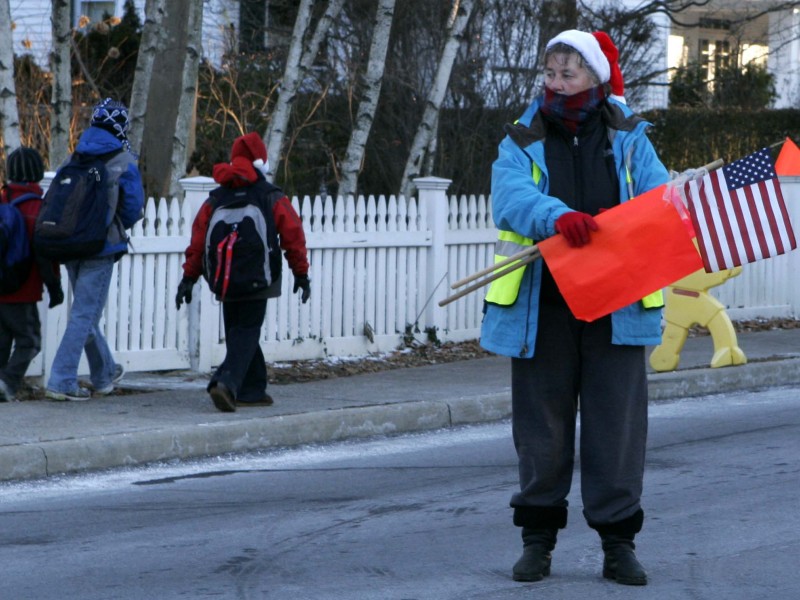
A few weeks ago, I tagged along with Bubbe, Skootch and the local crew during their 3 block walk to school. As we approached the 4-way, main street intersection where the library, high school and last stretch to the elementary school meet, our young neighbor turned to the boys and whispered, “If you don’t say thank you to Doris the world will blow up.”
I think the kid might be right.
Doris is a pillar of our sleepy, suburban town and a force to be reckoned with at that. Torrential rains, icy roads, blaring horns, and testy commuters can’t stop her from parading dead center into this congested intersection during school drop off and afternoon pick up to yell, “Crossing!”
A sentinel for youngsters and teenagers, siblings in strollers, parents and pets as they travel to and from parked cars, school, practice, religion, and home; pedestrians welcome her presence.
Many drivers do not. They are forced to sit, wait and wait some more until Doris releases them with a flick of the neon flag. Held up for work or a midday appointment; some grumble, honk, and huff. Others rant on social media; the rest stress in silence.
I get it. There was a time when I dropped Bubbe and Skootch to school on route to work and inched my car too close to Doris’s east end cross walk. She took one look at my tires, locked eyes and stepped off the corner. “Hey, don’t you see children here?”
Jolted from my to-do list daze, I sputtered an apology. “Sorry Doris. It won’t happen again.”
I got over it. We regular walkers know something about the way our crossing guard approaches her job that drivers may not notice from behind the windshield.
Skootch first met Doris when he was three. Every day he watched her from his wagon as I wheeled him across the street on the way to his big brother’s school. Doris was never too busy to say “Good morning.”
As they developed a rapport, she added compliments about Skootch’s smile, noticed haircuts, and congratulated him when he was able to walk the distance sans carriage. Doris showed Skootch respect. He reciprocated the sentiment.
Now, not a morning goes by on my little guy’s way to Kindergarten that he doesn’t wish Doris a good day. The same holds true for many middle and high schoolers who take time to look away from friends and up from phones to say Hello, leading me to believe her lesson has been repeated before.
New to the district, I was shocked to see Doris sitting in the audience of Bubbe’s first grade play. The parents who had older children were not. As it turns out, she does her best to attend each of the roughly 24 class plays held annually at the elementary school.
And during the holiday season, those who walk her way will find Doris’s open car trunk spilling with free cookies for the kids.
Such gestures are not taken for granted. When a few families found out she was having a “big” birthday, moms spread the news on Facebook. The next day, her “office” was decorated with signs, balloons, flowers and handmade cards.
Bubbe often walks with our young neighbor long before Skootch and I head out for the morning.
One day, Doris stopped me. “Your son and his friend are good walking buddies,” she said. “They walk, talk, there’s no fooling around and they follow the rules.”
Even though she and I have only exchanged pleasantries, Doris knew which child belonged to me and took the time to report he was making good choices.
Doris was cut off mid sentence during one of our pre-pick up exchanges by a speeding car. “What are you doing?” she hollered at the blurry sedan. “Where do these people think they’re going in such a hurry?”
I smiled and shook my head. “Doris, I don’t know.”
I continued onward, slowing my gait for the last block and a half to my destination feeling pretty confident that, after spending my few moments with this special lady, the world was safe from annihilation for one more day.
It takes a village to shape a community.
“Thank you, Doris.”

Courtesy Little Rock Family

“I hate Thursdays,” Bubbe barked. “I wake up early for band, go to school, spend two more hours in religious school, come home, and do homework. I need a break.”
“You’re right,” I sighed. “But education is not an option. Band is a commitment and you need to finish what you started. Please put your clarinet away, get one homework sheet done, and pack a snack for Hebrew school. We’re leaving in twenty minutes.”
Later that evening, I scrolled through registration emails for the upcoming season’s optional extracurricular activities:
Baseball: League 1 and/or League 2. Travel team.
Tennis, soccer, swim, lacrosse
Martial Arts
CrossFit Kids
Lego Engineering
Hip Hop
Drama, drawing, Junior Chef…
and thought about the last line of my response to Vicki Abeles’s New York Times’ Sunday Review piece, “Is School Making our Children Ill?”
Let’s resolve to take a step back and give children back their childhood.
In my Letter to the Editor, I complimented the Irvington High School community in Fremont, California for taking steps to rescue students from their high-stakes childhoods by limiting homework requirements and encouraged parents of young learners like me and those of my students to be brave, take ownership and embrace such efforts by curtailing after-school and evening enrichment in an effort to preserve the social, emotional and physical health of our children.
I often fantasize about what might happen if children, from toddlers to teenagers who live in a community laden with a multitude of well intended non-school related activities gave them up.
Would the children be lost; bored and confused by the lack of structure? At first, until they learned how to organize and occupy themselves.
Would they stare at screens instead of reaching out to each other? Probably, until an observant grown up or precocious peer stepped in.
Would their resumes suffer, leaving them unable to prosper in a society fixated on success, competition and career? On the contrary; extra time and space would give them a chance to practice the socialization, thinking, and problem solving skills needed to thrive later in life.
After the initial shock wore off, I think the children would forget how busy their lives once were.
I imagine they would pack the playgrounds and

Courtesy of Getty Images
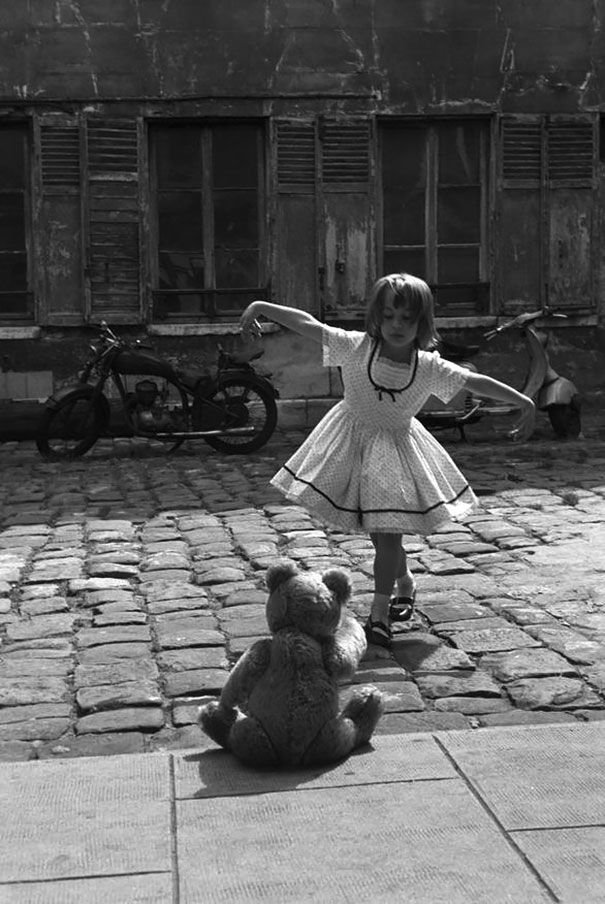
pick up the sport they previously raced off to play with whoever was nearby. Put on shows,
Courtesy Bored Panda
hang from trees,

Paul McDonough Courtesy Sasha Wolf Gallery, NYC
visit with friends,

Coney Island Teenagers Harold Feinstein
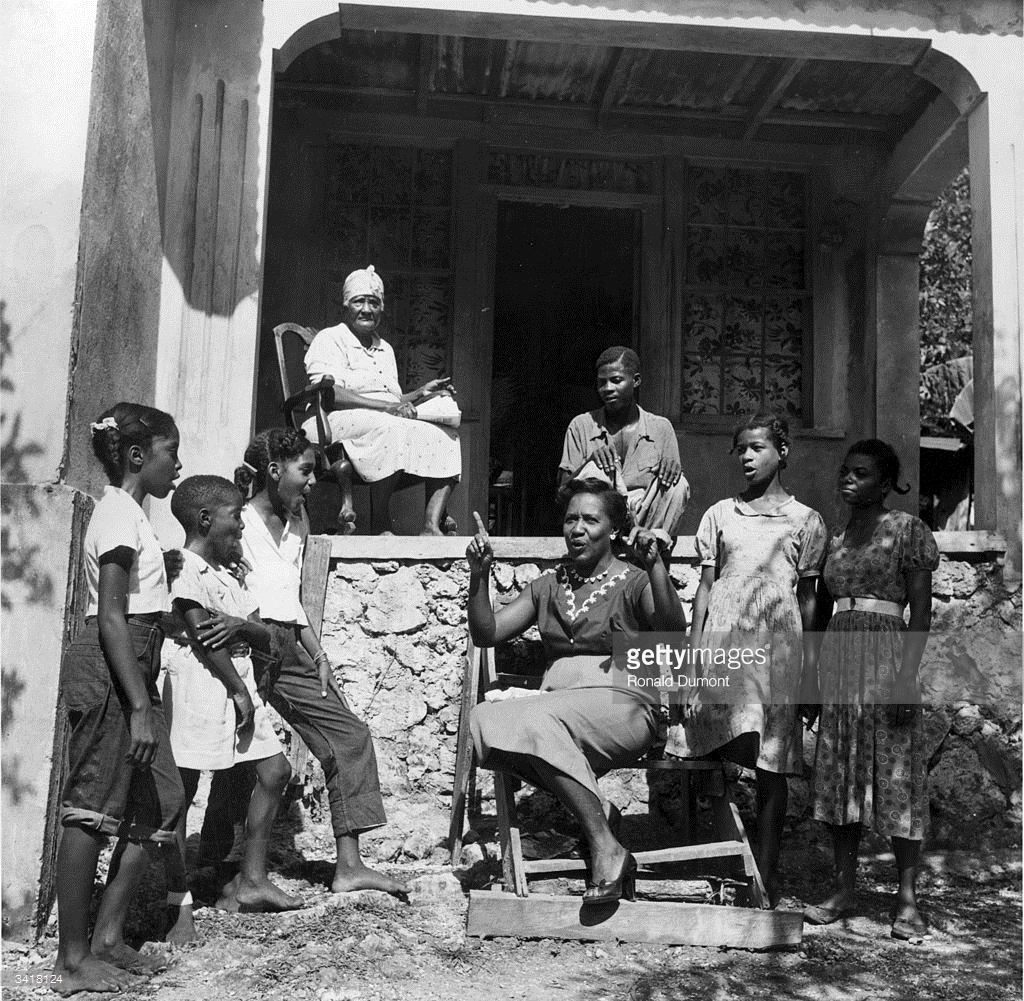
relax with family,
Courtesy Getty Images
get more sleep,

Courtesy Bored Panda
and take that necessary break.
And I’m pretty sure the adults in their lives would come to welcome the change.
Perhaps if these young people had scaled back schedules, their schools would not have to revamp homework policies like in Fremont, delay start times to accommodate the sleep deprived like in Seattle, and implement mindfulness training to battle the growing epidemic of childhood anxiety and depression as did New York City.
While the educational system has a responsibility to promote childhood wellness, we parents and guardians do as well. Children schlepping from class to practice to workshops and back again offsets the effort made by teachers and administrators and puts additional stress on kids and families.
Still, my under-scheduled fantasy is a daunting reality for this worried mom.
What if my boys are the only ones who opt out? They’ll feel excluded and alone.
What if they lose a competitive edge? How can they impress college admissions let alone make any high school team?
Doesn’t formal exposure to the arts, technology, and team play breed well roundedness?
It’s healthy to take risks; sample new and different things.
Besides, Bubbe and Skootch seem happy when they are busily in the mix.
But their childhood is not mine, nor is it about my parental goals, expectations, angst or insecurities.
With that, I marked the registration emails as unread and approached Bubbe.
“Here’s the deal,” I explained. “You know school and band are a given. Think about the three other activities you participated in this time last year. Rank them. Keep the top two.”
“I definitely want my tennis lesson,” he said. “And I’d like to try baseball again. So I guess I’ll stop CrossFit for now.”
I cringed. Bubbe nixed the one extra I believe physically and mentally benefited him most and chose a sport that requires a greater weekly commitment. “Okay,” I said. “Sounds like a plan.”
Gaining a free afternoon may not reflect the childhoods of yesteryear, but it’s a start.
Let’s bring back rest, play, and old-fashioned fun. This season resolve to take away one.
Evan McGlinn for The New York Times
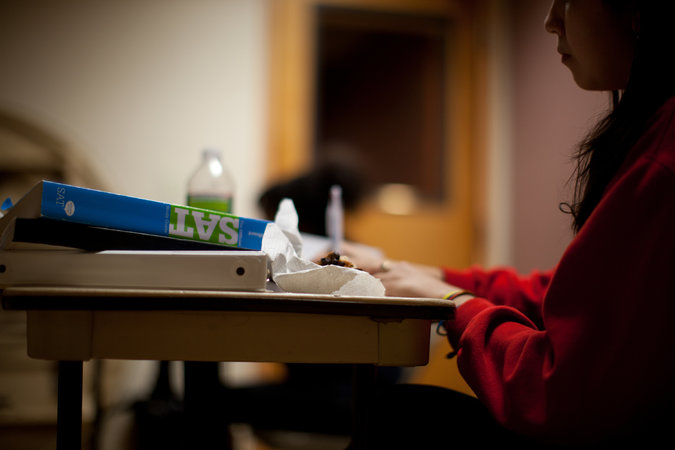
I wrote to The New York Times after reading Vicki Abeles’s Sunday Review piece, “Is School Making our Children Ill?” Today, The Times ran my response in the printed paper as well as online.
The link to today’s Letters page: Reducing the stress on students
Here’s what I had to say:
Kudos to the Irvington High School community in Fremont, Calif., for taking steps to rescue students from their high-stakes childhoods such as limiting homework requirements and implementing pass-fail grading in some classes.
As an early childhood educator and mother of elementary-school-age children, I think we parents of young learners also need to be brave, take ownership and embrace such efforts by curtailing after-school and evening extracurricular activities like sport travel teams, dance, music and STEM workshops in an effort to preserve the social, emotional and physical health of our children.
A multitude of these well-intended additions eats into down time, rest and unstructured play and creates stress for children and families. With a new year upon us, let’s resolve to take a step back and give children back their childhood.
JENNIFER REINHARZ
Pleasantville, N.Y.
Whether it’s 30 years or 50 years, Jan Wilberg’s universal truths about middle school ring true today.
I read her post and flash backed to the cans of Aqua Net arranged on my nightstand, the pages of Teen Beat that lined my locker walls, and how I seemed to be in love every other Tuesday. And although I would NEVER want to do it again, I must admit thinking about pubescent electricity made me smile. Thank you, Jan.
Middle school was a critical juncture in my life.Of course, this is only occurring to me now, fifty plus years after the fact. Here are five things I remember about middle school which I bet are still true today.
Changing classes meant I could change, too. In Science, I sat with my partner and prayed for invisibility. In English, I was reprimanded for interrupting and being sarcastic. In Art, I believed the teacher when she said it didn’t matter what my piece looked like. It was all about the technique. Each class in the day was a chance to shake off what had happened in the previous class, good or bad, start over, put on a new hat. I loved this because I’d spent the last months of elementary school waiting (in vain) to be called on to give a report on the Roman God Janus, each day was…
View original post 737 more words
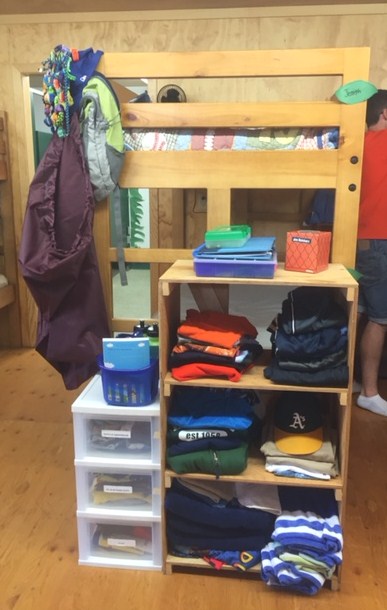
I stand behind the ironing board affixing labels to socks
and watch
you weave Stampy Cat from yellow bands
The knot in my throat
grows
An adventure looms
For each of us
Soon to camp
One month away
Your first time
Reminders simmer
Stay in groups. Be modest. Don’t let anyone take advantage.
Use your voice
Use soap
Use a tissue
Never spoken
Instead,
A mother’s mantra
“I love you. I’m proud. Have fun.”
We drive the twisted parkway
Duffle in trunk
You stare beyond the glass
Wondering
Raindrops camouflage my tears
Focus. Don’t dawdle. Clean up.
Take a risk
Trim those nails
Try the baked ziti
“I love you. I’m proud. Have fun.”
I stuff sheets into a top bunk
You flip cards with new mates
throw a glance
and disappear with the pack
It’s almost time
Brush your teeth. Wear glasses. Spray for bugs.
Be organized
Be flexible
Be you
“I love you. I’m proud. Have fun.”
A kiss good-bye
Stay a boy forever
One more squeeze
Experience it all
“I love you. I’m proud. Have fun.”

Mac leaned across the handrail to get the lay of the ride’s land as he commentated into the iPhone. “The happiest cruise that ever sailed. It’s a Small World is the only thing I remember about my first trip to Disneyland, and I remember everything about it. Even the boats are the same. That was 1968.”
My wide-eyed husband entertained our boys with his broadcast as we herded our way around the corral, down to dockside, and into holding pen number three. Mere seconds passed before our craft expeditiously floated into place. We boarded, sitting four across in the center row: Me, five-year old Skootch, big brother Bubbe and Mac.
“Mom and Dad, there are 16 in the boat.” A divine voice with an undertone of Disney princess addressed the crowd from a microphone equip cotton candy hued canopied chair perched above our heads.
Our crew patiently waited for the boat in front of us to move.
It didn’t.
The Divine Princess spoke again. “Sit the child on your lap so there are only 15 in the seats.”
As I thought, Who is she talking to? my quads seized, chest blotched, and shoulders went stiff.
Oh crap! She means us.
The disembarking Happy Boats stacked up behind ours while lines of guests stared us down in the midday sun.
“Take him,” I ordered Mac. He reached across and hoisted Skootch up.
“I want to sit next to Mom!” Our brawny boy wrestled his way off of Mac’s lap, knocked into his brother who fell into me. The ride rocked. Passengers braced.
“Leave the boat,” I instructed my husband. Mac returned to the dock to await the next cruise.
I counted fifteen passengers. Problem solved.
“All four of you get off and wait,” the princess summoned. “I said all four.”
“No! I want this boat!” snapped Skootch.
I shooed Bubbe to shore and stepped over my stuck puppy hoping his fear of abandonment would set in.
It did.
“Okay Okay I’m coming,” he said.
Back in pen three, I stared at the concrete, gripping my boys’ hands for moral grounding until the new boat slipped into place.
Again, we sat four across.
Still displeased, the Divine Princess made a final pronouncement. “Sit two and two.”
Mac and Bubbe moved up a row. Skootch stayed with me for safekeeping.
At long last, the happiest cruise set sail.

Serenaded by the world’s children, our shipmates marveled at the unfolding spectacle in Mandarin, German, and English as we drifted through the tunnel.
Skootch hardly cracked a smile.
He skeptically squinted at Alice

and curiously cocked his keppe at the carpets overhead.

Jiggled ever so slightly to the jarabe

and silently shimmied his way through the South Pacific.

It wasn’t’ until Skootch was embraced by a chorus of children adorned in white and gold that he completely settled into the experience.
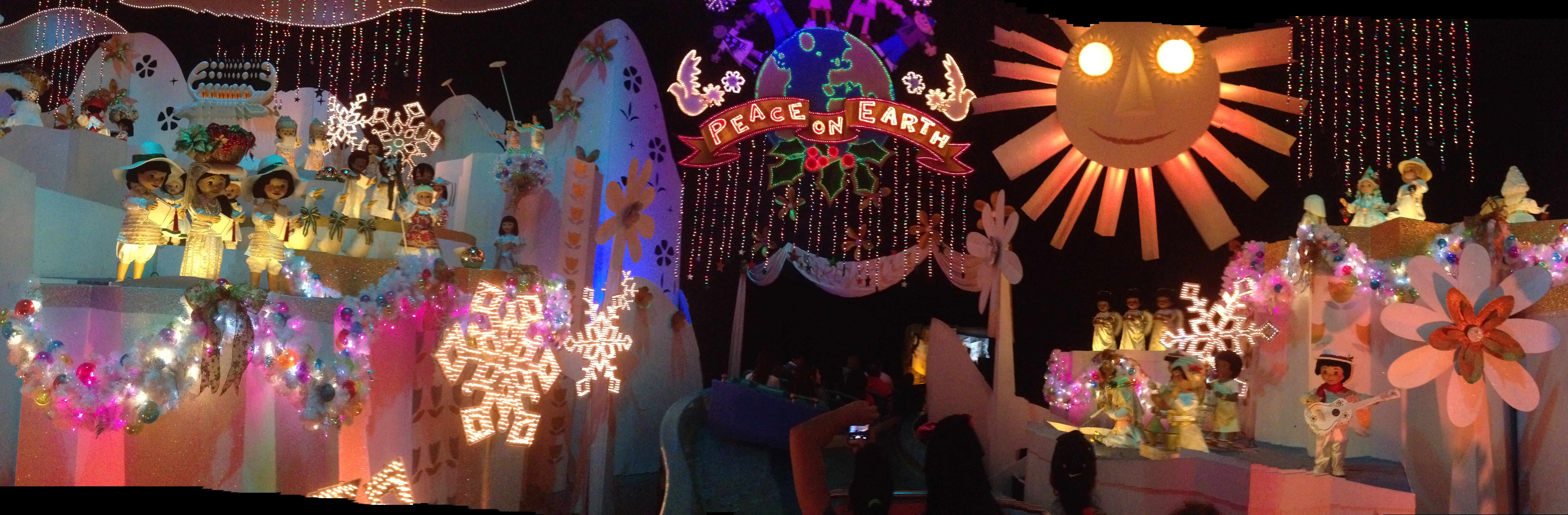
Our exiting vessel halted just shy of the Divine Princess’s throne. “So what did you think?” I asked.
My son looked up with a cheeky grin and sang,
It’s a small world after all.
When Disneyland celebrates its 100th anniversary, perhaps Skootch will be the father leaning over the handrail recording into a device.
“The happiest cruise that ever sailed. It’s a Small World is the only thing I remember about my first trip to Disneyland, and I remember everything about it. Even the boats are the same. That was 2015.
Kids, let me tell you something. This small world is filled with harmony, variety, and life. But if you truly want to enjoy the ride, sometimes you have to heed a higher voice, leave Mommy’s lap, and switch boats.”
On a recent visit out west, we squeezed in our first family trip to Disneyland between the measles outbreak and the park’s 60th anniversary. Recalling our Small World experience at a Passover Seder, we were surprised to hear how many guests could relate. From getting kicked out of a park for mischievous mischief to being trapped on It’s a Small World, it seems everyone had a Disney story. This one is ours.

‘Mommy has made this astonishing cake just to get you to eat your peas and provide valuable insight for your therapist in twenty years.’
I recently read an article that appeared on The Mid and Huffington Post Parents called, “Six Words That Will End Picky Eating.” The author offered a sensible approach to reigning in the habits of sensitive eaters. I was pleased to learn that I was on the right track with my child and his persnickety palate.
Later the same day, I read the below article, “The Importance of Lying about Food” and I thought, now that’s more like it.

April is National Child Abuse Prevention Month.
Child sexual abuse is an uncomfortable but necessary topic that I think deserves revisiting. As such, I am re-posting my essay from a year ago in lieu of an April guest post.
Providing our children with the tools to prevent abuse is a critical step in preventing it from happening. Fortunately, many schools take time to address the difference between good touches and bad touches. For those that do not, there is a movement in place to enact a law that requires it.
School programs are great but conversations need to start at home.
If we work together now to empower our children and ourselves, then perhaps the next generation will have less predator stories, abuse memoirs, and survivor synopses to read.
Child sexual abuse is pervasive in our society; it knows no race, religion, gender, or economic status. It has impacted generations of children; stripped them of their innocence and burdened them with trauma that can last a lifetime.
Last year, I wrote a blog post describing the day I first told my mother I was a survivor of child sexual abuse. I stayed silent until I was 30 years old. After countless conversations with fellow survivors and curious parents since that post, I felt it was high time I weigh in on this uncomfortable but necessary topic.
According to an article in Baby & Blog, “6 Ways to Protect your Child from Sexual Abuse”, “It is estimated that 1 in 4 girls and 1 in 6 boys will experience some form of sexual abuse before their 18th birthday. To put this in perspective, that means “in a classroom of 25 High School Seniors, 3 of the girls and 2 of the boys will have likely been sexually abused.”
Child sexual abuse is about power. Child molesters feel powerful when they exploit and take advantage of children. If we tip the scale and take away their power, then perhaps we can stop the abuse.
How do we do that? Empower the children. Empower ourselves.
Empower the Children
“The fight against child molesters begins by teaching the children.” – Norman E. Friedman
When Norman Friedman, a veteran mental health professional, educator, and author of Inoculating Your Children against Sexual Abuse; what every parent should know! made this statement during a lecture I thought,
That makes sense.
Based on Mr. Friedman’s years of experience working with the predator population, he concluded that one cannot cure a child molester. Therefore, the most effective thing we can do is empower children about their bodies and rights, and create an environment where they feel confident communicating with a trusted adult.
No Touch Zone.
First, teach them that everyone has a No Touch Zone. This zone is not limited to the child’s private parts. Friedman’s book outlines his definition and offers a noninvasive, appropriate, step by step approach to help trusted adults teach children about body parts, body rights, and what to say if a person attempts to court, solicit, or make them feel uncomfortable.
No Secrets.
“We don’t have secrets in our house; we have surprises,”
is a phrase we adopted in our home thanks to Friedman.
Secret is a word we innocently use with children. However, a predator’s efforts to create an inappropriate relationship with a child often includes secret keeping. Friedman suggests that if we stop using the term, a child will recognize when it’s out of place and subsequently say something to that person as well as his trusted adult.
A No Secrets policy in a family encourages open communication. Once a child feels confident that he can speak freely, we need to make sure we are listening.
Listen.
It is important we make it a priority to send verbal and nonverbal cues that convey to our children we are available; always, whenever, and no matter what. Listening and responding respectfully to both the good and bad things that are on their mind builds trust, offers reassurance that we care, and confirms that what they say is meaningful.
Young people exposed to life is tough and keep it in the family attitudes and who hear messages that it is their job to be responsible for adult feelings and needs add up to one thing in a child’s mind;
why bother talking, no one is listening.
Listening to our children is critical, but believing is lasting.
Believe.
When a child confides that someone approached him in an uncomfortable way, it might be easier to swallow the shock and impossibility of it all by downplaying the incident, particularly if it’s someone familiar.
But we need to take their words seriously.
Regardless of how the information made us feel or who the party was; that child felt violated on some level and had the courage to speak up. That means we need to find a way to help him feel safe again as well as confront the party in question.
I can’t tell you how many times I’ve heard an adult recount their abuse experience and share how he had the courage to tell a trusted loved one only to be brushed off, ignored, told he was wrong or the cause of it.
Can you imagine being that little boy who was brave enough to say something, not believed, and then continually abused?
Empower Ourselves
It’s not enough to empower our children. We trusted adults have to get in on the act.
Go with your gut.
A friend felt conflicted about telling her neighbor to take a hike when he wanted to play basketball with her eight year old son. She felt bad for the lonely, old man even though her gut told her his request was odd. Confronting him would be impolite, so she protected her son by making excuses when the child continued to ask if he could play with the man.
She ultimately took action.
To her son she said, “In many ways, he’s like a stranger to us. We know him but we really don’t.”
And to the man, “Come on. You know grownups don’t play with kids.”
After that, he left my friend’s son alone.
Advocate at all costs.
If you know someone in your family has a history of abusing others and you suspect that the person is being inappropriate with a child even if it isn’t your child, call him out on it. If that’s too scary, anonymously call Child Protective Services.
It is not enough for us to avoid an abuser in the family because it is likely he is out in the world hurting someone else’s children. So for the sake of that little boy and girl, their innocence, emotional health, and future please be strong;
take a stand.
We can’t wait for predators to rehabilitate or the laws to punish them accordingly. And since the majority of molesters are not strangers, they will continue to live in our communities, interact with children, and be part of our families.
I’m sorry if this frightens you, but it is true.
So empower your children. If a predator tries to court a child equip with the right tools, he’ll realize that he doesn’t stand a chance and will back off.
And empower yourself. Let those who are inappropriate with children know that we trusted adults are paying attention.
Scale tipped. Power stripped.



 Red Said What?